Climate and balance
Our planet operates as a finely tuned system where countless natural processes work in harmony to maintain stable conditions for life. Climate balance represents the dynamic equilibrium between energy received from the sun, energy reflected back into space, and the intricate mechanisms that distribute heat and regulate atmospheric composition across the globe. Understanding this balance is not merely an academic exercise—it’s fundamental to grasping why even small disruptions can cascade into significant environmental shifts that affect every living organism.
This equilibrium has evolved over millions of years, creating the conditions that allowed complex ecosystems to flourish. From the depths of the ocean to the upper atmosphere, interconnected systems continuously adjust and respond to maintain stability. However, this balance is far more delicate than it appears, relying on precise interactions between the atmosphere, oceans, land surfaces, ice sheets, and living organisms. When we examine these mechanisms closely, we gain crucial insights into both the resilience and vulnerability of our climate system.
What Makes Climate Balance Possible?
At its core, climate balance depends on a series of planetary-scale mechanisms that regulate temperature and distribute energy. These systems have maintained Earth within a habitable range for hundreds of millions of years, despite variations in solar output and other external factors.
The Role of Atmospheric Composition
The atmosphere functions like a selective blanket, allowing certain wavelengths of light to pass through while trapping others. This greenhouse effect is essential for life—without it, Earth’s average temperature would plummet to approximately -18°C instead of the current 15°C. The key players include water vapor, carbon dioxide, methane, and other trace gases, each absorbing and re-emitting heat in specific ways. The concentration of these gases determines how much warmth remains near the surface versus escaping to space.
Think of it as a thermostat that responds to changes: when temperatures rise, certain processes naturally remove carbon dioxide from the atmosphere through increased plant growth and ocean absorption. When temperatures fall, volcanic activity and reduced weathering of rocks allow carbon dioxide to accumulate, warming the planet again. This negative feedback loop has historically prevented runaway heating or cooling scenarios.
Ocean Currents and Heat Distribution
Oceans act as massive heat reservoirs and transportation systems, moving warm water from the equator toward the poles and returning cold water in a global conveyor belt known as thermohaline circulation. This process prevents extreme temperature differences between regions and moderates coastal climates worldwide.
Consider the Gulf Stream, which carries tropical warmth northward across the Atlantic. This single current system makes Northwestern Europe significantly warmer than other regions at similar latitudes. Without this heat distribution mechanism, London would experience winters comparable to those in Labrador, Canada. The density-driven nature of these currents—controlled by temperature and salinity—means they’re sensitive to changes in ice melt and precipitation patterns.
The Carbon Cycle as Earth’s Thermostat
Carbon continuously moves between the atmosphere, oceans, soil, rocks, and living organisms in what scientists call the carbon cycle. This circulation occurs across vastly different timescales: plants absorb carbon dioxide within minutes, while the weathering of silicate rocks removes atmospheric carbon over millennia. The ocean absorbs roughly 25-30% of human carbon emissions annually, acting as a crucial buffer against rapid atmospheric changes.
However, this system has finite capacity. As oceans absorb more carbon dioxide, they become more acidic, which reduces their ability to take up additional carbon. Meanwhile, forests store carbon in wood and soil, but only while they remain standing and healthy. This interconnected web of carbon storage and release determines atmospheric composition and, consequently, global temperature.
Natural Cycles That Regulate Our Climate
Water Cycle and Temperature Control
Water exists in all three states on Earth—solid ice, liquid water, and water vapor—and transitions between them constantly. This cycle is intimately connected to climate regulation because each phase change involves significant energy transfer. When water evaporates from the ocean surface, it carries heat upward into the atmosphere. When it condenses into clouds and falls as rain, that energy releases, driving atmospheric circulation patterns.
Evaporation cools surface waters, while condensation warms the upper atmosphere. Precipitation redistributes fresh water across continents, feeding rivers and aquifers. Ice and snow reflect sunlight back to space, cooling the planet, while darker ocean or land surfaces absorb more heat. This creates a complex feedback system where temperature changes affect the water cycle, which in turn influences temperature.
Seasonal Patterns and Energy Exchange
Earth’s tilted axis creates seasonal variations in solar energy received at different latitudes. These predictable cycles drive annual patterns of temperature, precipitation, and biological activity. Plants in temperate regions synchronize their growth with seasonal warmth, absorbing atmospheric carbon dioxide during spring and summer, then releasing it as they decompose in autumn and winter.
These seasonal rhythms also influence ocean stratification, ice formation, and migration patterns of countless species. The consistency of these cycles over thousands of years has allowed ecosystems to adapt and optimize their life strategies around predictable conditions.
Feedback Loops: Amplifying and Dampening Effects
Climate systems contain both positive feedbacks that amplify changes and negative feedbacks that resist them. Understanding these mechanisms is crucial for predicting how the system responds to disturbances. A classic example of positive feedback is the ice-albedo effect: when ice melts, it exposes darker water or land that absorbs more sunlight, causing additional warming and further ice loss. This self-reinforcing cycle accelerates changes.
Conversely, negative feedbacks provide stability. As atmospheric carbon dioxide increases, plants potentially grow faster (carbon dioxide fertilization), removing more carbon from the atmosphere. Additionally, warmer temperatures increase evaporation and cloud formation, which can reflect more sunlight back to space, providing a cooling effect. The balance between these competing feedbacks determines whether the climate system remains stable or shifts rapidly between states.
Why Is Climate Balance So Fragile?
Despite operating successfully for millions of years, Earth’s climate equilibrium can be disrupted when changes occur faster than natural regulatory mechanisms can respond. The speed and magnitude of disturbance matter as much as the disturbance itself.
Tipping Points in Climate Systems
Certain components of the climate system can undergo abrupt, irreversible changes when pushed beyond critical thresholds. These tipping points represent transitions from one stable state to another, often with dramatic consequences. Examples include:
- Collapse of major ice sheets, which would commit the planet to meters of sea-level rise
- Dieback of tropical rainforests, transforming carbon sinks into carbon sources
- Disruption of ocean circulation patterns, drastically altering regional climates
- Release of methane from thawing permafrost, amplifying atmospheric warming
The concerning aspect of tipping points is their potential to trigger cascade effects. One system crossing its threshold might push another system closer to its own tipping point, creating a domino effect that’s difficult to reverse.
The Speed of Current Changes
Natural climate variations occur over centuries to millennia, allowing ecosystems time to migrate, adapt, or evolve. Current rates of change compress these timescales dramatically. When conditions shift faster than species can relocate or adjust, the result is ecosystem disruption and biodiversity loss. Coral reefs, for instance, evolved over millions of years to thrive within specific temperature ranges; when ocean temperatures rise too quickly, corals expel their symbiotic algae and bleach, often dying before they can adapt.
This temporal dimension matters because Earth’s regulatory mechanisms—rock weathering, ocean mixing, soil formation—operate slowly. Rapid changes can overwhelm these natural buffers before they effectively stabilize conditions.
Interconnected Ecosystems at Risk
Climate balance doesn’t exist in isolation from biological systems. Ecosystems both respond to and regulate climate through countless interactions. When these living systems degrade, their climate-regulating functions diminish. Wetlands filter water and store carbon, forests create rainfall through transpiration, and phytoplankton in oceans produce oxygen while absorbing carbon dioxide. The loss of any component weakens the overall resilience of the climate system.
Biodiversity’s Role in Climate Stability
Biological diversity provides the foundation for ecosystem resilience and climate regulation. Diverse forests store more carbon and recover more quickly from disturbances than monocultures. Varied marine ecosystems maintain more stable food webs that support carbon sequestration in deep ocean sediments through biological processes.
Consider forests as an example: different tree species have varying drought tolerances, pest resistances, and growth rates. When climate conditions shift, diverse forests contain species already adapted to the new conditions, allowing the forest to persist and continue its carbon storage function. A monoculture forest, by contrast, might experience complete die-off if conditions exceed the tolerance of its single species, releasing all stored carbon back to the atmosphere.
Soil biodiversity also plays a crucial role. The countless bacteria, fungi, and invertebrates in healthy soil help store carbon in stable organic compounds, regulate nutrient cycling, and maintain soil structure that prevents erosion. When soil ecosystems degrade, their carbon storage capacity diminishes and their ability to support plant growth weakens, creating another feedback loop that affects climate balance.
Restoring and Maintaining Climate Balance
Understanding climate balance naturally leads to questions about preservation and restoration. Nature-based solutions leverage the same processes that have regulated Earth’s climate for millennia. Protecting and restoring forests, particularly tropical rainforests and old-growth temperate forests, preserves massive carbon stores while maintaining local and regional climate patterns through moisture recycling.
Wetland restoration offers multiple benefits: these ecosystems store carbon in waterlogged soils where decomposition proceeds slowly, filter pollutants from water, and provide flood control. Coastal wetlands—mangroves, salt marshes, and seagrass beds—store carbon particularly efficiently while protecting shorelines from erosion and storm damage.
Ocean health is equally critical. Protecting marine ecosystems from overfishing, pollution, and habitat destruction maintains their capacity to absorb carbon dioxide and regulate nutrient cycles. Sustainable fishing practices preserve the complex food webs that support biological carbon pumps, where organic matter sinks to the deep ocean, sequestering carbon for centuries.
On land, sustainable agriculture practices can transform farmland from carbon sources into carbon sinks. Techniques include:
- Minimizing soil disturbance to preserve soil carbon and microbial communities
- Maintaining continuous plant cover through cover crops and diverse rotations
- Integrating trees into agricultural landscapes (agroforestry) for shade, wind protection, and carbon storage
- Restoring degraded soils with organic amendments and reduced chemical inputs
These approaches work with natural processes rather than against them, enhancing the inherent capacity of ecosystems to regulate local and global climate. The key insight is that climate balance depends on healthy, functioning ecosystems across all biomes—from Arctic tundra to tropical seas.
Climate and balance are inseparable concepts when we examine Earth’s living systems. The intricate web of physical, chemical, and biological processes that maintain habitable conditions demonstrates both remarkable resilience and surprising vulnerability. By understanding how atmospheric composition, ocean circulation, carbon cycles, and ecosystem functions interact to create stability, we gain the knowledge needed to recognize threats to this equilibrium and identify pathways toward sustainability. The climate system’s complexity means that protecting and restoring natural ecosystems remains our most reliable strategy for maintaining the delicate balance that supports all life on our planet.
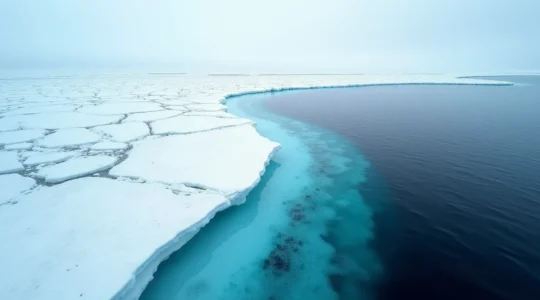
How Positive Feedback Loops Make Climate Predictions Unreliable?
Conventional risk models built on assumptions of gradual, linear climate change are becoming obsolete; they fail to account for self-amplifying feedback loops that trigger abrupt, non-linear state shifts in Earth’s systems. Positive feedback loops, like the ice-albedo effect and permafrost…
Read more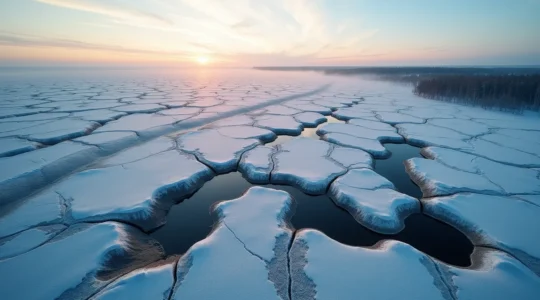
Why Permafrost Thaw Is the “Sleeping Giant” of Climate Change?
Permafrost thaw is not a single climate problem; it is a series of distinct geotechnical and biogeochemical failures that demand a specific, engineering-focused response. Waterlogged soils don’t just release carbon; they switch to releasing methane (CH4), a gas with over…
Read more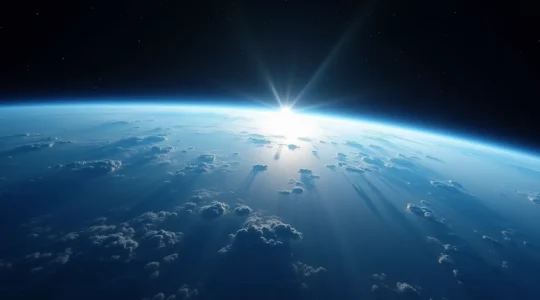
The Planetary Thermostat: Is Solar Radiation Management an Ethical Solution or a Dangerous Illusion?
Solar Radiation Management is less a technological solution than a profound philosophical gamble, scaling our domestic desire for comfort to a planetary level with potentially irreversible consequences. The primary risks are not just technical but deeply ethical, including the “termination…
Read more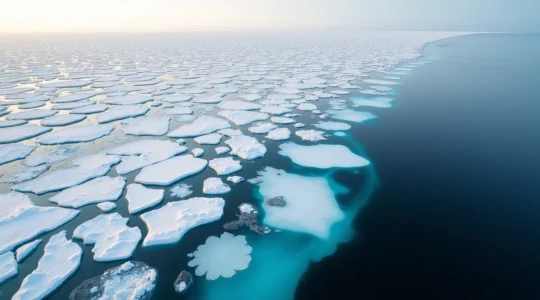
Why the Loss of Arctic Sea Ice Accelerates Global Warming by 30%?
The diminishing Arctic cryosphere is no longer just a consequence of climate change; it has become a dominant, quantifiable driver of global radiative forcing. Albedo change, driven by surface melt dynamics, has a warming effect equivalent to 25% of all…
Read more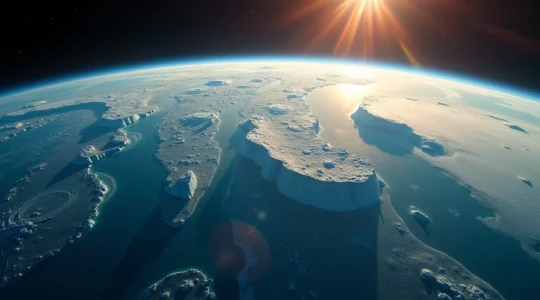
How to Recognize the Signals of a Shift in the Planetary Climate State?
The current climate crisis is not merely about warming, but a fundamental state transition from the stable Holocene to a volatile new planetary equilibrium. The predictable environment that enabled civilization was a historical anomaly that is now ending. Key signals…
Read more
How Climate Instability Is Making Historical Insurance Models Obsolete?
The critical failure of today’s insurance models isn’t just their reliance on historical data; it’s their inability to price correlated, systemic risks in a world of simultaneous climate shocks. Non-stationarity means past flood and storm patterns are no longer a…
Read more
How the Earth’s Thermal Equilibrium Is Disrupted by Radiative Forcing?
Contrary to the simple ‘greenhouse blanket’ analogy, Earth’s warming is caused by an accelerating, quantifiable energy imbalance, not a static one. The planet is now absorbing nearly one Watt of excess energy for every square meter, a rate that has…
Read more
Why Methane Reduction Is the Fastest Way to Slow Near-Term Warming?
Prioritizing methane reduction is not an alternative to decarbonization; it is the most powerful strategic lever for slowing the rate of warming in the next two decades. Methane’s short atmospheric life means that cuts in emissions deliver near-immediate cooling effects,…
Read more
The Engine Is Stalling: Why Atmospheric Changes Are Locking in Our Weather
Stuck weather isn’t random; it’s a predictable failure cascade within Earth’s interconnected atmospheric systems. Arctic warming is collapsing the critical temperature gradient that powers the jet stream, causing it to meander and stall. This leads to more frequent and intense…
Read more
How to Create Cool Local Microclimates in Heat-Stressed Urban Gardens?
Escaping urban heat in your garden isn’t just about planting more trees. The most effective strategy is to treat your space as a small-scale thermodynamic system that you can actively engineer. By understanding and manipulating core principles like airflow, heat…
Read more