
The contamination of our drinking water by synthetic fertilizers is not an accident; it is a predictable biochemical cascade of systemic failures with devastating public health consequences.
- Excess nitrogen from fertilizers inevitably leaches into groundwater as nitrate, a compound linked to cancer and other severe health issues.
- Conventional agricultural practices often worsen this contamination through soil degradation and poorly timed nutrient application, creating a cycle of dependency and pollution.
Recommendation: We must urgently shift from merely managing pollution to implementing agroecological systems that prevent it at the source, safeguarding both our food supply and our water.
The clear water flowing from a rural tap is a symbol of health and security. Yet, beneath this placid surface, a silent crisis is unfolding. The widespread use of synthetic nitrogen fertilizers in agriculture, hailed for decades as a miracle for crop yields, has become a primary source of chemical contamination for our most vital resource: drinking water. While many discussions focus on the general environmental harm of fertilizer runoff, they often miss the terrifying specificity of the problem. This is not a vague threat; it is a direct pathway from farm to faucet, where industrial chemicals infiltrate the groundwater our communities depend on.
This contamination is not an unavoidable side effect of modern farming. It is the result of a cascade of predictable chemical and biological failures. Every decision—from the type of nitrogen used and the exact week of its application to the long-term changes in soil pH—directly contributes to a measurable, and often irreversible, public health emergency. The core of this crisis is nitrate, the highly mobile form of nitrogen that travels from fields into our aquifers, and ultimately, into our bodies. Understanding this process is the first step toward confronting the stark reality of what our agricultural system is doing to our water.
This analysis will dissect the mechanisms of this contamination. We will explore how nitrates trigger ecological collapse in surface waters, examine the precise agricultural missteps that lead to massive nutrient waste, and uncover the hidden chemical reactions in the soil that exacerbate the problem. Most importantly, we will present the evidence-based solutions that can break this cycle of pollution, moving from a model of chemical dependency to one of ecological resilience.
The following sections will deconstruct this public health threat, moving from the visible consequences to the invisible chemical reactions and finally to the systemic solutions. This guide provides the scientific evidence needed for rural communities and water quality regulators to understand the stakes and demand meaningful action.
Summary: How Synthetic Fertilizers Poison Water with Nitrates
- Why Do Nitrates Trigger Deadly Algal Blooms in Nearby Lakes?
- How to Calculate the Exact N-P-K Needs to Reduce Over-Application by 20%?
- Urea vs Compost: Which Releases Nitrogen More Predictably for Plant Growth?
- The pH Mistake That Locks Out Nutrients After Years of Ammonium Usage
- When to Apply Nitrogen to Minimize Leaching During Spring Rains?
- How to Intercrop Legumes with Cereals to Reduce Nitrogen Costs?
- The Intake Pipe Mistake That Killed Millions of Oyster Larvae in Oregon
- Agroecology vs Conventional Farming: Which Model Yields Better Profits in Drought Years?
Why Do Nitrates Trigger Deadly Algal Blooms in Nearby Lakes?
The first and most visible sign of severe nitrate pollution is often not in the drinking water itself, but in the explosive death of nearby lakes and reservoirs. This process, known as eutrophication, is a direct consequence of nutrient overload. Nitrates, designed to feed crops, are just as effective at feeding microscopic algae in aquatic ecosystems. When excess nitrates from farm fields run off into surface water, they trigger a catastrophic chain reaction—a biochemical cascade that suffocates the entire ecosystem. The result is a harmful algal bloom (HAB), a thick, toxic soup that blankets the water’s surface.
This dense layer of algae blocks sunlight from reaching aquatic plants below, causing them to die and decay. The decomposition process consumes massive amounts of dissolved oxygen in the water, creating vast hypoxic or anoxic “dead zones” where fish, shellfish, and other organisms cannot survive. These blooms are not just an eyesore; they are ecologically lethal and economically devastating. According to EPA data, the tourism industry loses close to $1 billion annually due to impacts on fishing and recreational activities. Some cyanobacteria within these blooms also produce potent toxins that can harm wildlife and humans who come into contact with the contaminated water.

This ecological collapse is a stark warning. The same nitrates causing this visible destruction are simultaneously and silently percolating down into the groundwater, moving from the lake to the aquifer. The algal bloom on the surface is a clear indicator of the invisible contamination happening below ground, a problem that directly threatens the safety of drinking water supplies.
How to Calculate the Exact N-P-K Needs to Reduce Over-Application by 20%?
The root cause of nitrate pollution is not the use of fertilizer itself, but its chronic and systemic over-application. Conventional agriculture often operates on a “more is better” principle, applying nitrogen as a cheap insurance policy for maximizing yield. This approach ignores a critical fact: plants can only absorb a finite amount of nutrients. Anything beyond that is waste. Frighteningly, research shows that up to 50% of nitrogen from inorganic fertilizer is not assimilated by plants and ends up leaching into groundwater or being released as greenhouse gases. This isn’t just inefficient; it’s the primary driver of the contamination crisis.
Reducing this waste by even 20% would represent a monumental step toward protecting water sources. The key is to move from blanket application to precision nutrient management. This involves treating fertilizer not as a bulk commodity but as a precise prescription tailored to the specific needs of the soil and crop. The first step is always comprehensive soil testing to establish a baseline of existing nutrients. Only then can a farmer calculate the exact N-P-K (Nitrogen-Phosphorus-Potassium) ratio required to supplement what the soil already provides, ensuring every pound of applied fertilizer serves a purpose.
Adopting this scientific approach requires a fundamental shift in practice, guided by principles that minimize waste and maximize uptake. By synchronizing nutrient availability with the crop’s growth cycle, farmers can significantly cut both their costs and their environmental impact, preventing harmful nitrates from ever leaving the field.
Action Plan: A Scientist’s Checklist for Precision Nitrogen Application
- Determine the Right Amount: Conduct annual soil tests to analyze existing nutrient levels. Use this data, along with crop-specific uptake models, to calculate the precise amount of additional nitrogen needed, avoiding any excess.
- Apply at the Right Time: Synchronize fertilizer application with the crop’s peak growth stages. Avoid applying nitrogen before heavy spring rains or well outside the primary growing season when plants are dormant and leaching risk is highest.
- Use the Right Method: Employ techniques like banding (placing fertilizer directly in the root zone) or fertigation (applying it through an irrigation system) to deliver nutrients where they are needed most and reduce surface runoff.
- Select the Right Placement: Incorporate fertilizer into the soil rather than broadcasting it on the surface. This minimizes loss to the atmosphere (volatilization) and runoff during rain events, maximizing plant uptake.
Urea vs Compost: Which Releases Nitrogen More Predictably for Plant Growth?
The choice of nitrogen source is another critical decision point in the biochemical cascade of contamination. The debate often centers on synthetic fertilizers like urea versus organic sources like compost. From a purely chemical standpoint, urea offers a rapid and predictable release of nitrogen. Its simple molecular structure is quickly converted in the soil to ammonium and then nitrate, making a large dose of nutrients immediately available to plants. However, this speed is also its greatest liability. If a large application is followed by heavy rain, this surge of soluble nitrate is easily washed out of the root zone and into the groundwater before the crop can use it.
Compost, on the other hand, provides a slow and variable release of nitrogen. The nutrients are bound in complex organic molecules that must be broken down by soil microbes over time. This acts as a natural controlled-release system, spoon-feeding the plants as they need it and reducing the risk of a massive leaching event. Furthermore, compost builds soil organic matter, improving water retention and overall soil health. While synthetic fertilizers can contribute to soil acidification over time, compost enhances long-term carbon storage and soil structure.
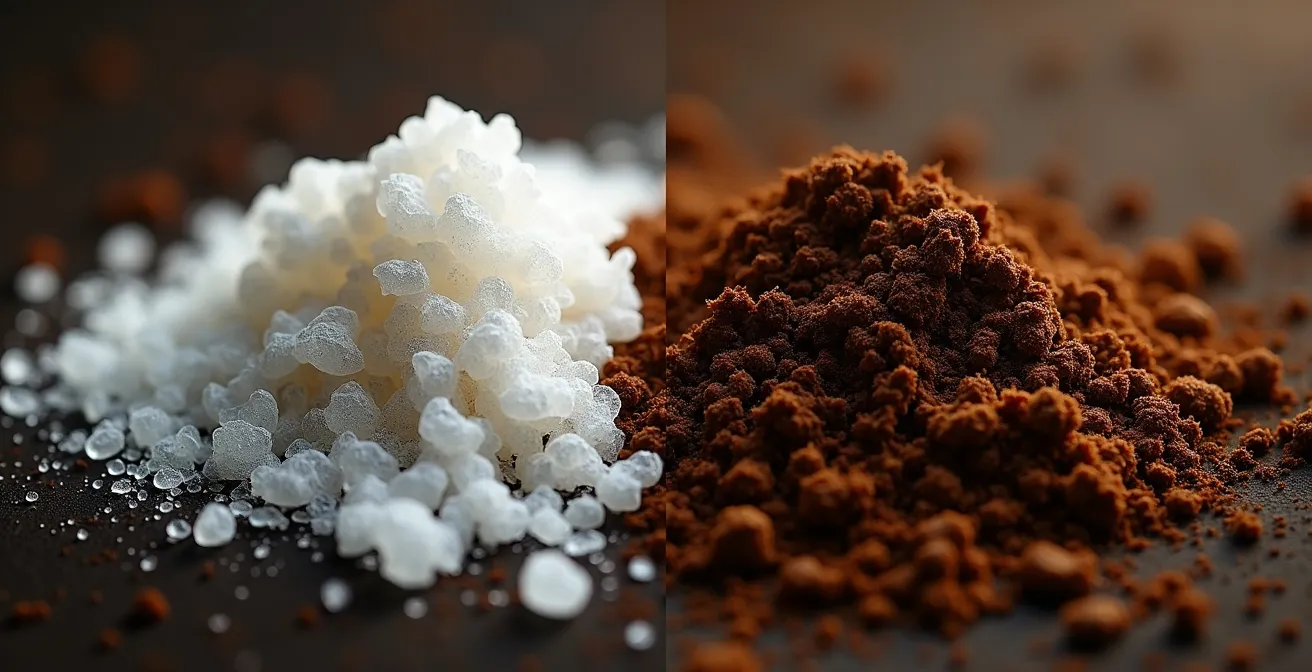
However, the distinction is not as simple as “synthetic is bad, organic is good.” A surprising analysis published by The Breakthrough Institute shows that, over long periods, the total amount of nitrate leached can be similar between the two if both are over-applied. The critical difference lies in the control and the impact on soil health. The table below highlights the key trade-offs.
| Factor | Urea | Compost |
|---|---|---|
| Nitrogen Release Rate | Rapid, predictable in short-term | Slow, variable based on microbial activity |
| Leaching Risk | High risk of acute loss after application | Lower acute risk, but steady leaching if over-applied |
| Soil Health Impact | May contribute to acidification | Builds soil organic matter |
| Carbon Sequestration | None | Enhances carbon storage |
The pH Mistake That Locks Out Nutrients After Years of Ammonium Usage
One of the most insidious and overlooked factors in the nitrate crisis is a slow-moving chemical disaster occurring in the soil itself: acidification. Many common synthetic fertilizers are ammonium-based (NH4+). When soil bacteria convert this ammonium into nitrate (NO3-)—a process called nitrification—they release hydrogen ions. Over years of repeated applications, this process steadily lowers the soil’s pH, making it more acidic. This seemingly minor change triggers a catastrophic failure of nutrient management, a phenomenon known as nutrient lockout.
In acidic soils, essential plant nutrients like phosphorus, potassium, and calcium become chemically “locked up” and unavailable for plant uptake, even if they are abundant in the soil. At the same time, toxic elements like aluminum become more soluble and can harm plant roots. A farmer might see signs of nutrient deficiency and, ironically, apply even more fertilizer to compensate, which only accelerates the acidification and worsens the problem. This creates a vicious cycle where more fertilizer is used, less is absorbed by the crop, and a greater percentage is left to leach into the groundwater as nitrate. This is a predictable failure, built into the chemistry of long-term ammonium fertilizer use.
The consequences are starkly visible in communities that rely on private wells for drinking water. For instance, Minnesota’s Township Testing Program found that in some vulnerable agricultural areas, over 10% of private wells have nitrate levels above the EPA’s legal limit of 10 mg/L. This isn’t a random occurrence; it’s a direct result of decades of nutrient overload, exacerbated by soil degradation. As a leading expert confirms:
Based on stable isotope testing, the majority of nitrate in Nebraska groundwater with elevated concentrations originates from commercial nitrogen fertilizer. Overapplication of any nitrogen source in excess of plant needs will over time result in nitrate accumulation and contaminate local groundwater.
– Daniel Snow, University of Nebraska’s Water Sciences Laboratory
When to Apply Nitrogen to Minimize Leaching During Spring Rains?
Timing is everything in the battle against nitrate leaching. The single greatest risk for mass contamination occurs when large amounts of soluble nitrogen are present in the soil just before or during periods of heavy rainfall, particularly in the spring. Plants with small, undeveloped root systems are incapable of absorbing the sudden flood of nutrients, and the excess water efficiently flushes the highly mobile nitrate ions straight down past the root zone and into the groundwater. Applying fertilizer in late fall after harvest or in early spring long before planting is a recipe for disaster, as it guarantees the majority of the nitrogen will be lost before the crop can ever use it.
The most effective strategy to counter this is split application. Instead of applying all the necessary nitrogen in one large dose, it is split into two or three smaller applications throughout the growing season. This method, often called “spoon-feeding,” aims to match nutrient availability directly with the crop’s metabolic needs at different growth stages. A smaller dose is applied at planting to support early growth, with subsequent applications occurring during periods of rapid biomass development when the plant’s nutrient demand is at its peak. This ensures a much higher percentage of nitrogen is taken up by the crop, leaving far less to be washed away.
In regions with excessively wet springs, more advanced techniques are required to hold nitrogen in the soil. These methods are designed to deliberately slow down the chemical cascade of contamination.
Case Study: Using Nitrogen Inhibitors to Prevent Spring Leaching
To combat nitrogen loss during periods of high precipitation, agronomists have developed chemical tools known as nitrification inhibitors. Products containing compounds like nitrapyrin or dicyandiamide (DCD) are mixed with ammonium-based fertilizers before application. These inhibitors work by temporarily suppressing the activity of the soil bacteria (Nitrosomonas) that convert stable ammonium (NH4+) into mobile nitrate (NO3-). The goal is to keep the nitrogen in its more stable, positively-charged ammonium form, which binds to negatively-charged soil particles and is less prone to leaching. This effectively creates a time-delay, ensuring the nitrogen remains in the root zone through wet periods and is available for crops to use later in the season when conditions are drier and growth demands are higher.
How to Intercrop Legumes with Cereals to Reduce Nitrogen Costs?
The most effective way to solve nitrate pollution is to design an agricultural system that requires less synthetic nitrogen in the first place. Agroecological practices like intercropping offer a powerful, nature-based solution. This technique involves planting two or more crops in close proximity, where one crop provides a direct benefit to the other. The classic example is intercropping a cereal grain like corn with a legume like clover or vetch. Legumes possess a remarkable biological advantage: they form a symbiotic relationship with rhizobia bacteria, which live in their roots and can “fix” atmospheric nitrogen, converting it into a form the plants can use.
By planting these crops together, the legume effectively becomes a living, on-site fertilizer factory. It provides a steady, slow-release source of nitrogen to the soil, which then becomes available to the neighboring cereal crop, dramatically reducing or even eliminating the need for synthetic nitrogen inputs. A healthy stand of a cover crop like red clover, for example, can provide up to 150 lbs of nitrogen per acre, a significant portion of what a corn crop requires. This not only saves the farmer money but also prevents the massive nutrient overload that leads to leaching.
The benefits of intercropping extend far beyond nitrogen fixation. This practice creates a more complex and resilient agricultural ecosystem with multiple advantages over a monoculture system. These include:
- Natural weed suppression through increased ground cover and competition.
- Breaking pest and disease cycles that thrive in single-crop environments.
- Increased land-use efficiency, often yielding more total biomass per acre than if the crops were grown separately.
- Building long-term soil health by increasing organic matter and improving soil structure.
The Intake Pipe Mistake That Killed Millions of Oyster Larvae in Oregon
The consequences of nitrate pollution extend beyond agriculture and human health, triggering catastrophic failures in connected industries. A stark example occurred at the Whiskey Creek Shellfish Hatchery in Oregon, which supplies oyster larvae to most of the West Coast’s oyster farms. For years, the hatchery suffered mysterious and massive die-offs of its larvae. The eventual culprit was not a disease, but a change in ocean chemistry: the water being drawn into the hatchery’s intake pipes had become highly acidic. This ocean acidification, driven by CO2 emissions, was exacerbated by local nutrient runoff from nearby agricultural lands, creating water so corrosive it dissolved the larvae’s delicate shells before they could form.
This incident is a chilling illustration of an ecological tipping point—a moment where a system crosses a threshold and collapses. It is also a dire warning about the widespread threat to our water systems. The same pollutants devastating marine life are flowing into the drinking water of millions. Data from the Environmental Working Group (EWG) is alarming, showing that 1,695 water systems serving millions of Americans had nitrate levels at or above thresholds linked to increased cancer risk. It’s crucial to understand that even levels below the legal limit of 10 mg/L are not necessarily safe. The health risks are serious and costly, with a 2019 study finding nitrate contamination may contribute to thousands of cancer cases annually.
For rural communities on private wells, the danger is even more acute, as their water is often untested and untreated. A common and dangerous misconception is that boiling water can make it safe. In fact, boiling water does not remove nitrates; it concentrates them, making the water even more hazardous, particularly for infants who can develop a life-threatening condition called methemoglobinemia, or “blue baby syndrome.”
Key Takeaways
- Nitrate contamination is a direct result of systemic over-application of synthetic fertilizers, with up to 50% wasted as pollution.
- The pollution creates a “biochemical cascade,” causing toxic algal blooms, “dead zones” in lakes, and silent contamination of groundwater aquifers.
- Long-term use of ammonium fertilizers degrades soil health by lowering pH, which “locks out” nutrients and ironically leads to even more fertilizer use and runoff.
Agroecology vs Conventional Farming: Which Model Yields Better Profits in Drought Years?
The ultimate argument against the current system of chemical-intensive agriculture may be economic. While conventional farming with synthetic fertilizers can produce high yields in ideal conditions, it creates a brittle system highly vulnerable to climate shocks like drought. Agroecological systems, in contrast, are designed for resilience. Practices like cover cropping, no-till farming, and the use of compost build soil organic matter. This is not just a feel-good metric; it is a critical economic asset. For every 1% increase in soil organic matter, soil can hold an additional 20,000 gallons of water per acre. In a drought year, that stored water can be the difference between a harvest and a total crop failure.
Conventional systems rely on a constant input of water and chemicals, making them less profitable and more risky when resources are scarce. Agroecological farms, with their healthier soils, function like a sponge, capturing and holding rainfall more effectively. This makes them inherently more drought-resistant and, therefore, more profitable in the volatile climate we now face. The reliance on synthetic nitrogen becomes a liability, while the investment in soil health becomes a powerful form of insurance.
Federal conservation programs designed to support this shift have shown a remarkable return on investment, though they remain chronically underfunded. The economic case for change is clear: building soil health is not an expense, but an investment in long-term profitability and stability.
| Program | Investment | Return | Applicant Success Rate |
|---|---|---|---|
| Conservation Stewardship Program | $1 | $4 in benefits | 42% (2010-2020) |
| Environmental Quality Incentives Program | Variable | Multiple benefits | 31% (2010-2020) |
The data clearly shows that investing in ecological resilience is not at odds with profitability; in fact, it is the key to it. As climate change makes extreme weather more common, the resilient, low-input model of agroecology will consistently outperform the fragile, high-input model of conventional farming.
This is not a problem without a solution. The evidence is clear: by adopting precision nutrient management, investing in soil health, and embracing agroecological principles like intercropping, we can break the cycle of contamination. For communities and regulators, this means demanding stronger protections, funding for water testing, and supporting farmers in transitioning to practices that protect our shared water resources. The time for incremental change is over; a systemic shift is required to safeguard our health and secure our future.