
The stability of an entire ecosystem doesn’t rest on its largest or most abundant species, but on ‘keystone’ species that act as critical leverage points. Their removal, even when their population is small, triggers a domino effect called a trophic cascade that fundamentally alters energy pathways, leading to systemic collapse. True conservation, therefore, is not about saving individual species, but about understanding and managing these hidden, powerful connections.
The story of an ecosystem’s health is often written in its rivers and forests. We’ve all heard the iconic tale: wolves return to Yellowstone, elk populations change their behavior, riverbanks recover, and the entire landscape is transformed. This powerful narrative often focuses on the wolf as a hero, a single actor restoring balance. While true, this simplified view misses the deeper, more intricate mechanism at play. It’s not just about one predator eating one prey; it’s about the regulation of entire energy pathways through the ecosystem.
The common approach to conservation often prioritizes species with large populations or charismatic appeal. We focus on saving the panda or the tiger, which is vital, but we might overlook the less visible, less numerous species that act as the linchpin holding the entire structure together. These are the keystone species, and their impact is disproportionately massive compared to their abundance. Their disappearance creates a void that triggers a chain reaction, a “trophic cascade” that can unravel decades of ecological stability.
But what if the key to resilient ecosystems isn’t just protecting specific animals, but identifying and reinforcing these critical ‘ecological leverage points’? This article moves beyond the hero narrative to explore the systems science behind keystone species. We will dissect the mechanisms they control, from redirecting energy flows in kelp forests to physically engineering habitats with beaver dams. Understanding these connections is the fundamental shift needed for more effective, proactive conservation—a shift from saving pieces to managing the whole system.
This guide will explore the profound impact of these critical species. We will delve into their roles, learn how to identify them, and understand the economic and ecological consequences of their presence or absence, providing a complete framework for appreciating their foundational importance.
Summary: The Unseen Architecture of Ecosystems
- Why Are Sea Otters Considered the Guardians of Kelp Forests?
- How to Identify the Keystone Species in Your Local Woodland or Wetland?
- Keystone Species vs Dominant Species: Which Has a Disproportionate Impact?
- The Conservation Error of Ignoring Low Populations of Keystone Predators
- When to Reintroduce Beavers to Mitigate Droughts Naturally
- How to Protect Livestock When Wolves Return to the Area?
- When to Reintroduce Native Predators: The 3 Critical Success Factors
- How Rewilding Projects Can Revitalize Rural Economies Through Ecotourism?
Why Are Sea Otters Considered the Guardians of Kelp Forests?
The title “guardian” is not an exaggeration; sea otters are a prime example of a keystone species acting as an ecological leverage point. Their role extends far beyond their charismatic appearance, directly influencing the structure and health of one of the planet’s most productive ecosystems. The mechanism is a straightforward but powerful trophic cascade. Kelp forests provide habitat and food for countless species, but they are vulnerable to sea urchins, voracious herbivores that can graze entire forests down to barren rock, creating “urchin barrens.”
Sea otters are the primary predator of these sea urchins. By keeping urchin populations in check, otters prevent overgrazing and allow kelp to flourish. This single act of predation has immense ripple effects. Healthy kelp forests are not only biodiversity hotspots but also carbon sinks. In fact, it’s been shown that kelp forests guarded by sea otters can sequester up to 12 times more carbon than those without them. The World Wildlife Fund reinforces this, noting that kelp forests can store massive amounts of carbon, making otters unlikely climate heroes.
A century-long study of the California coastline provides striking evidence of this connection. Researchers found that kelp forests are more extensive and resilient to climate change in areas where sea otters have re-established their populations. Where otters were present in Central California, kelp forests increased by over 57%, whereas the Northern and Southern coastlines, largely devoid of otters, saw losses of 63% and 52% respectively. This demonstrates that the otter’s presence isn’t just beneficial; it’s a critical factor for the long-term survival and function of the entire coastal ecosystem.
How to Identify the Keystone Species in Your Local Woodland or Wetland?
Identifying a keystone species requires thinking like an ecological detective. It’s not about finding the most common or largest organism, but the one with the greatest leverage. A park ranger or nature enthusiast can learn to spot these critical players by looking for signs of disproportionate influence. For instance, an oak tree is a dominant species—it has a large biomass and provides structure, but removing one oak tree has a limited effect. Removing a handful of beavers, however, can drain an entire wetland.

The evidence of a keystone species is often written on the landscape. The image above shows the work of a beaver, a classic ecosystem engineer. These creatures physically alter their environment by building dams, which creates wetlands that serve as nurseries for fish, amphibians, and insects, and provide feeding grounds for birds and mammals. Their impact is a clear, physical signature of their keystone role. To find these species, you need a specific toolkit of observational skills.
Your Field Guide: An Ecological Detective’s Toolkit for Identifying Keystone Species
- Observe Influence vs. Abundance: Differentiate between high-biomass dominant species and high-impact keystone species. Is a species’ influence on the ecosystem far greater than its population size would suggest?
- Look for Bottlenecks: Search for ecological bottlenecks, such as a single key pollinator that serves multiple plant species, or a single predator that controls the main herbivore.
- Identify Ecosystem Engineers: Find signs of species that create or modify habitats. Look for woodpecker cavities, beaver dams, prairie dog burrows, or badger setts that provide shelter for other species.
- Document “Ghost” Signals: Note symptoms of a *missing* keystone species. Over-browsed vegetation, a lack of saplings, or an explosion in the population of a single herbivore often points to the absence of an apex predator.
- Search for Invisible Keystones: Remember that not all keystones are animals. Mycorrhizal fungi networks in the soil can be essential for nutrient transfer to an entire forest, and specific soil bacteria are critical for nitrogen fixation.
Keystone Species vs Dominant Species: Which Has a Disproportionate Impact?
Understanding the difference between keystone and dominant species is crucial for effective conservation. The distinction isn’t about importance—both are vital—but about the nature of their influence. A dominant species, like the oak trees in a forest or the corals in a reef, has a large impact because it has a large biomass. It forms the very structure of the habitat. In contrast, a keystone species has a disproportionately large impact relative to its small population size. They are the ultimate example of ecological leverage.
The sea otter is a classic keystone species; a small number of otters regulate the entire kelp forest ecosystem. A dominant species is the kelp itself; its sheer mass defines the habitat. Sometimes, a species can be both. For example, coral polyps build massive reef structures, making them a dominant species. Yet, by creating a habitat that coral reefs created by polyps support approximately 25% of all marine species, they also function as a keystone species. The following table clarifies these critical differences, highlighting where conservation efforts can have the most leverage.
| Characteristic | Keystone Species | Dominant Species |
|---|---|---|
| Population Size | Relatively small | Large biomass |
| Ecosystem Impact | Disproportionately large | Proportional to biomass |
| Removal Effect | Rapid cascade, ecosystem collapse | Gradual change |
| Conservation ROI | High leverage – small effort, big impact | Lower leverage – requires managing entire population |
| Example | Sea otters (few control entire kelp forest) | Oak trees (many provide forest structure) |
This distinction shapes conservation strategy. Protecting a dominant species often involves large-scale habitat preservation, while protecting a keystone species can be a high-leverage intervention. By focusing on the keystone, a small, targeted effort can secure the health of an entire ecosystem, offering an exceptional return on investment for conservation resources.
The Conservation Error of Ignoring Low Populations of Keystone Predators
One of the most subtle but damaging errors in conservation is equating presence with function. A species can still exist in an area but be “functionally extinct.” This occurs when its population drops so low that it no longer performs its critical keystone role in the ecosystem. For keystone predators, this means they are no longer numerous enough to regulate prey populations, initiating a trophic cascade even while they are technically still present on species lists.
This concept is more than theoretical; it has measurable consequences. Studies suggest that predator populations below viable thresholds can experience a 50% reduction in ecological function. This means half of their regulatory effect on the ecosystem is lost, leading to issues like over-browsing by herbivores and the subsequent decline of plant communities. As Dr. Teri Nicholson, an expert in the field, explains, this is a critical blind spot in conservation planning.
A species can be ‘functionally extinct’ long before the last individual dies. A population of predators can become too small to perform its keystone role, even if the species technically still exists in the area.
– Dr. Teri Nicholson, PLOS Climate Study on Kelp Forest Recovery
Ignoring functional extinction leads to a false sense of security. Conservation managers might see that a predator species is still present and assume the ecosystem is healthy, while in reality, the underlying structure is crumbling. Effective monitoring must therefore go beyond simple population counts. It requires assessing the *impact* of the species: Are prey behaviors being influenced? Is vegetation recovering? Answering these questions provides a true measure of ecological health and prevents us from realizing a species’ importance only after its functional role has completely vanished.
When to Reintroduce Beavers to Mitigate Droughts Naturally
Beavers are unparalleled ecosystem engineers, and their reintroduction is increasingly recognized as a powerful, low-cost strategy for restoring watersheds and building climate resilience. By building dams, beavers create complex wetland systems that act like natural sponges. These wetlands slow down water flow, recharge groundwater tables, filter pollutants, and create diverse habitats. In an era of increasing drought and extreme weather, these services are invaluable. However, a successful reintroduction requires careful planning and site assessment.
Before bringing beavers back to a landscape, managers must evaluate a series of ecological and social factors to ensure success and minimize human-wildlife conflict. A thorough assessment involves:
- Assessing Stream Suitability: There must be sufficient year-round water flow and a gentle enough stream gradient to allow for dam construction.
- Verifying Food Sources: The area must have an ample supply of preferred food sources, primarily woody vegetation like willow, aspen, and cottonwood.
- Analyzing Infrastructure Risk: A downstream flood risk analysis for roads, railways, and human developments is critical to prevent unintended consequences.
- Evaluating Ecosystem Services: The potential for water storage, pollution filtration, and sediment trapping should be calculated to justify the project.
- Engaging the Community: Pre-reintroduction workshops with local landowners are essential to address concerns about flooding or tree cutting and build support.
- Planning for Mitigation: Tools like “beaver deceivers” and other flow devices should be prepared in advance to manage water levels and prevent conflict in sensitive areas.
Case Study: Ecosystem Service Stacking in a Rewilded Valley
Following a successful predator reintroduction that allowed willow populations to recover from over-browsing, a valley became suitable for beavers once again. With ample food and materials, beavers returned and began building dams. The resulting wetlands dramatically increased biodiversity, attracting otters, muskrats, ducks, and songbirds. Most importantly, the expanded wetland system now holds back spring meltwater, releasing it slowly throughout the dry summer months, effectively mitigating regional drought conditions and supporting downstream agriculture.
When done correctly, beaver reintroduction is a textbook example of “ecosystem service stacking,” where a single intervention provides a multitude of compounding benefits, from biodiversity to water security.
How to Protect Livestock When Wolves Return to the Area?
The return of apex predators like wolves is a sign of ecological recovery, but it can also create significant challenges for ranchers. The conflict between predators and livestock is one of the biggest hurdles to successful rewilding. However, decades of experience have led to the development of a suite of innovative, non-lethal deterrents that allow for coexistence. The key is to shift from a reactive mindset of lethal control to a proactive strategy of conflict avoidance, using an understanding of wolf behavior to protect herds.
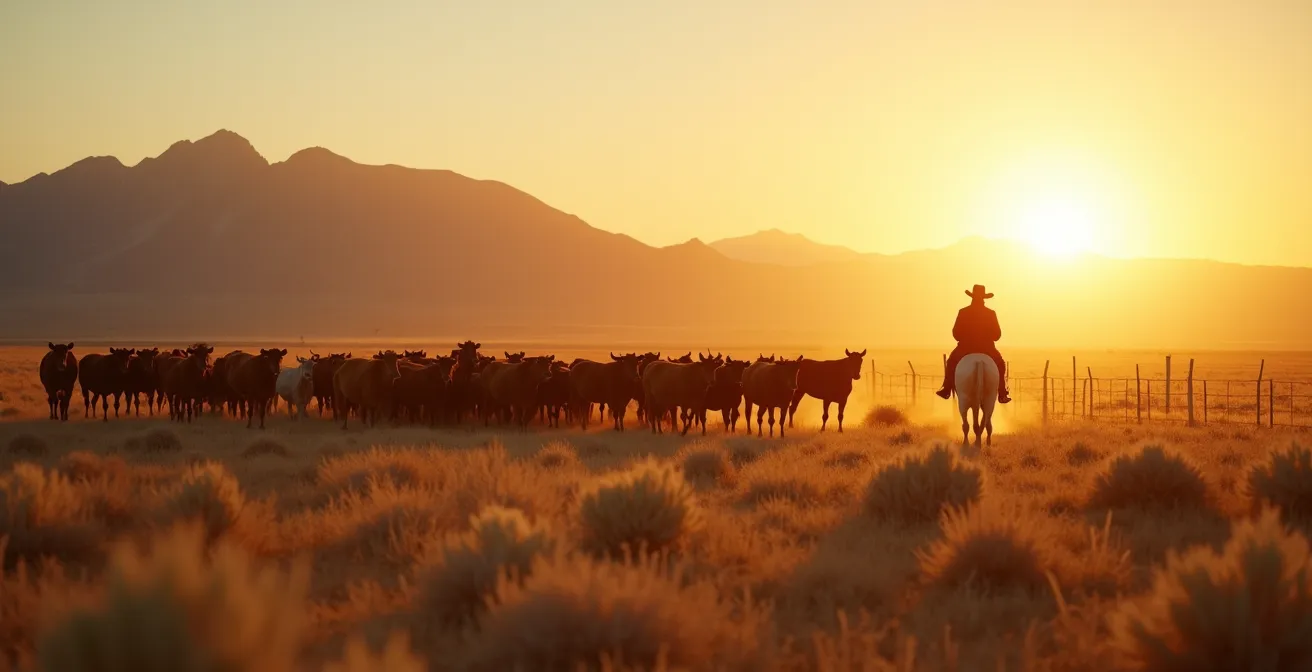
These strategies focus on making livestock a harder, less appealing target. By creating an environment of vigilance and unpredictability, ranchers can tap into a wolf’s natural wariness and encourage them to pursue wild prey instead. This approach not only saves livestock but also preserves the wolf’s crucial role as a keystone species in the wider ecosystem. Modern methods include:
- Bio-fencing: Deploying scents from dominant wolves (like urine) to create “territorial” boundaries that other packs naturally avoid crossing.
- Fladry and Turbofladry: Stringing ropes with colorful, flapping flags around pastures. The movement triggers a wolf’s neophobia (fear of new things), creating a psychological barrier.
- Range Rider Programs: Employing dedicated personnel to maintain a consistent human presence around herds, especially during high-risk periods like calving season. Range riders can use GPS data from collared wolves to anticipate pack movements.
- Strategic Grazing: Actively moving cattle away from high-risk zones, such as known wolf dens or travel corridors, based on seasonal movement patterns.
- Livestock Guardian Animals: Integrating specially bred guardian dogs (like Great Pyrenees or Anatolian Shepherds), llamas, or donkeys into herds. These animals live with the livestock and will aggressively defend them against threats.
Combining several of these non-lethal tools creates a multi-layered defense that is far more effective than any single method. It represents a paradigm shift towards managing landscapes for both productive agriculture and functional ecosystems.
When to Reintroduce Native Predators: The 3 Critical Success Factors
Reintroducing native predators is one of the most powerful—and complex—tools in ecological restoration. The successful reintroduction of 41 wild gray wolves to Yellowstone National Park in 1995 is the benchmark case study. After a 70-year absence, their return triggered a trophic cascade that reshaped the entire ecosystem. The success of this project was not accidental; it was built on a foundation of scientific understanding that highlights three critical factors for any predator reintroduction.
1. Ecosystem Readiness: The ecosystem must have a sufficient prey base and suitable habitat to support a viable predator population. In Yellowstone, the elk population had exploded in the absence of wolves. The reintroduction was timed to address this imbalance, as wolves contributed to bringing Yellowstone elk numbers down from 17,000 in 1995 to around 4,000 in later years. This reduction in grazing pressure was the first step in the cascade that led to the recovery of aspen and willow along riverbanks.
2. Social and Political Support: A reintroduction cannot succeed without the support or at least tolerance of the local human population. The Yellowstone project involved years of public hearings, environmental impact statements, and the creation of compensation funds for livestock losses. Managing the human dimension is as critical as managing the biological one. Without community buy-in, any reintroduction effort is likely to fail due to political pressure or illegal poaching.
3. Genetic Viability and Long-Term Monitoring: The initial reintroduced population must be large and genetically diverse enough to avoid inbreeding and establish a self-sustaining population. The 41 wolves brought to Yellowstone came from different packs in Canada to ensure genetic health. Furthermore, a commitment to long-term scientific monitoring is essential to track the population’s success, study its ecological effects, and adapt management strategies as the ecosystem responds in often surprising ways.
Key Takeaways
- Ecosystem stability relies on the function of keystone species, not just their presence or population size.
- Identifying keystone species requires looking for disproportionate impact—their influence is far greater than their biomass suggests.
- Effective conservation acts on ecological leverage points, using targeted efforts on keystone species to create system-wide benefits.
How Rewilding Projects Can Revitalize Rural Economies Through Ecotourism?
The restoration of functional ecosystems through rewilding and the protection of keystone species is not just an ecological victory; it’s a powerful engine for economic revitalization, particularly in rural areas. When landscapes become richer in biodiversity and iconic wildlife returns, they become destinations. This creates a new, sustainable economic base rooted in ecotourism, research, and ecosystem services, offering a compelling alternative to economies based solely on resource extraction or agriculture.
This “rewilding value chain” generates both direct and indirect benefits. Wildlife watching tours, specialized lodging, and local restaurants see an immediate influx of revenue. This, in turn, fuels indirect growth through local employment, infrastructure development, and increased demand for local goods. The presence of a healthy ecosystem becomes a unique brand that can be leveraged for premium products, such as “Bison-Safe Honey” or “Wolf-Country Beef.” The economic benefits are diverse and can be structured across multiple sectors.
| Economic Sector | Direct Benefits | Indirect Benefits |
|---|---|---|
| Tourism & Hospitality | Wildlife watching tours, lodging, restaurants | Local employment, infrastructure development |
| Research & Education | Scientific grants, university field stations | Student spending, conference hosting |
| Media Production | Documentary filming, photography tours | Global marketing exposure, brand recognition |
| Agricultural Products | Premium branding (e.g., Bison-Safe Honey) | Product differentiation, price premiums |
| Ecosystem Services | Carbon credits, watershed protection payments | Reduced infrastructure costs, climate resilience |
Ultimately, a healthy ecosystem is a valuable economic asset. As one analysis of rewilding economics shows, the benefits extend far beyond tourism. Scientific research projects bring in grants and students, while documentary film crews provide global marketing exposure. By embracing rewilding, rural communities can diversify their economies, create new opportunities, and build a more resilient future based on the most valuable asset they have: a living, functional landscape.
By adopting a systems-based view focused on keystone species and ecological leverage, park rangers, conservationists, and landowners can move beyond simply protecting individual animals. They can become architects of resilient, functional, and economically vibrant landscapes for generations to come. Start by applying the ecological detective’s toolkit in your own local environment to identify the hidden connections that hold it all together.