Resources and limits
Our planet operates as a closed system with finite resources and measurable limits. While this might seem like an abstract concept, it shapes everything from the water flowing through our taps to the food on our plates and the stability of our climate. Understanding the relationship between the resources we depend on and the boundaries we cannot safely cross has become one of the most urgent questions of our time.
This article serves as your comprehensive introduction to the interconnected concepts of natural resources and planetary limits. Whether you’re taking your first steps into environmental awareness or seeking to deepen your understanding, you’ll discover what resources truly are, why certain boundaries matter so critically, how we’re currently pushing against these limits, and what pathways exist toward a more sustainable future.
What Are Natural Resources and Why Do They Matter?
Natural resources encompass everything the Earth provides that supports life and enables human civilization. These range from the obvious—forests, fresh water, and fertile soil—to the less visible but equally vital, such as the atmosphere’s capacity to absorb carbon dioxide or the intricate networks of organisms that pollinate our crops.
Renewable Versus Non-Renewable Resources
Resources fall into two fundamental categories that determine how we must approach their use. Renewable resources regenerate naturally over human timescales when properly managed. Solar energy arrives continuously, forests regrow when harvested sustainably, and fish populations replenish when not overfished. However, the critical word here is “when”—even renewable resources can be depleted if extraction exceeds regeneration rates.
Non-renewable resources, by contrast, form over geological timescales measured in millions of years. Fossil fuels, mineral deposits, and certain groundwater aquifers fall into this category. Once consumed, they’re effectively gone from a human perspective. A coal seam that took 300 million years to form can be exhausted in mere decades.
Ecosystem Services: The Hidden Value
Beyond tangible materials, ecosystems provide services we often take for granted until they fail. Wetlands filter water and buffer against floods. Forests regulate local climate and prevent soil erosion. Coral reefs protect coastlines and nurture fisheries. These ecosystem services represent value that rarely appears in economic calculations yet remains fundamental to human wellbeing. When a forest is clearcut, we count the timber’s value but rarely calculate the loss of carbon storage, water regulation, and biodiversity habitat.
Understanding Planetary Boundaries: The Safe Operating Space
Imagine Earth as a spaceship with multiple life-support systems. Each system has thresholds—push beyond them, and you risk triggering irreversible changes. Scientists have identified nine planetary boundaries that define a “safe operating space for humanity,” providing a framework for understanding our planet’s limits.
The Nine Critical Thresholds
These boundaries span interconnected Earth systems:
- Climate change: Governed by atmospheric CO2 concentration and radiative forcing
- Biodiversity loss: Measured through extinction rates and ecosystem integrity
- Biogeochemical flows: Particularly nitrogen and phosphorus cycles disrupted by fertilizer use
- Ocean acidification: The absorption of excess atmospheric carbon by seawater
- Land-system change: Conversion of forests and grasslands to agriculture or urban areas
- Freshwater use: The rate of global freshwater consumption
- Atmospheric aerosol loading: Particulate matter affecting climate and health
- Stratospheric ozone depletion: The protective layer shielding us from UV radiation
- Novel entities: New substances like plastics and persistent chemicals released into the environment
Boundaries Already Crossed
Current research indicates we’ve already transgressed several of these boundaries. Biodiversity loss occurs at rates tens to hundreds of times higher than the background extinction rate. Nitrogen and phosphorus flows have more than doubled their safe boundaries, creating dead zones in coastal waters worldwide. Climate change continues accelerating beyond the established safe threshold. Think of these as warning lights illuminating on our planetary dashboard—each one signals a system under dangerous stress.
Resource Depletion: Current Challenges and Future Threats
The gap between what Earth can sustainably provide and what humanity currently demands grows wider each year. Currently, humanity uses resources as if we had approximately 1.7 Earths available—a deficit we temporarily mask by depleting stocks accumulated over millennia.
Water Scarcity: A Growing Crisis
Despite covering 71% of Earth’s surface, only 2.5% of water is fresh, and merely 1% is accessible for human use. Major aquifers on every continent are being drained faster than rainfall can replenish them. The Ogallala Aquifer beneath the American Great Plains, which took 10,000 years to fill, has lost approximately one-third of its volume in less than a century. Rivers like the Colorado no longer consistently reach the sea. As populations grow and climate patterns shift, water scarcity affects billions, triggering conflicts and mass migrations.
Soil Degradation: Losing the Foundation
Healthy soil forms extraordinarily slowly—it can take up to 1,000 years to generate just three centimeters of topsoil. Yet intensive agriculture, deforestation, and poor land management cause soil to erode much faster than it forms. Approximately one-third of the world’s agricultural soils are already degraded. Without fertile soil, food security collapses. This quiet crisis receives far less attention than climate change yet poses equally severe consequences for civilization.
Biodiversity in Freefall
Species populations have declined dramatically in recent decades, with habitat loss, pollution, overexploitation, and climate change as primary drivers. This isn’t merely about losing charismatic animals—each species plays roles in ecosystem functioning. Pollinators fertilize crops, predators control pest populations, and decomposers recycle nutrients. As biodiversity erodes, ecosystems become less resilient, more prone to collapse, and less able to provide the services humanity depends upon.
Sustainable Resource Management: Pathways Forward
Understanding limits doesn’t mean accepting inevitable decline. Rather, it clarifies what’s required for long-term prosperity. Multiple approaches exist for aligning human activity with planetary boundaries while meeting genuine human needs.
Circular Economy Principles
The traditional linear model—extract, manufacture, use, dispose—assumes infinite resources and infinite waste absorption capacity. The circular economy reimagines this flow, designing out waste and keeping materials in productive use. Products are designed for disassembly, repair, and recycling. Biological materials return safely to the soil while technical materials circulate through recovery systems. Companies lease products rather than selling them, maintaining ownership and responsibility throughout the lifecycle. This approach dramatically reduces resource extraction while creating new economic opportunities.
Regenerative Practices
Sustainability aims to maintain current conditions, but regenerative approaches go further—actively restoring degraded systems. Regenerative agriculture builds soil health through practices like cover cropping, diverse rotations, and minimal tillage. Reforestation and rewilding initiatives restore ecosystems and their services. Watershed restoration improves water quality and quantity. These practices recognize that damaged systems can heal when given appropriate conditions and time.
Efficiency and Sufficiency
Two complementary strategies address resource use. Efficiency means obtaining more value from each unit of resource—better-insulated buildings requiring less heating, vehicles traveling further per liter of fuel, or irrigation systems delivering water precisely where needed. Sufficiency asks deeper questions about how much is genuinely needed for wellbeing, challenging assumptions about perpetual growth and endless consumption. Both approaches prove essential for living within limits.
Conservation and Protected Areas
Setting aside spaces where ecosystems function with minimal human interference allows biodiversity to persist, maintains genetic reservoirs, and preserves ecosystem services. Currently, protected areas cover approximately 15% of land and 7% of oceans, though conservation targets call for substantially higher percentages. Effectiveness matters as much as extent—”paper parks” that lack enforcement provide little actual protection. Indigenous-managed territories, which often demonstrate exceptional conservation outcomes, deserve recognition and support.
Navigating the relationship between resources and limits represents perhaps the defining challenge of our era. The encouraging truth is that solutions exist—we possess the knowledge, technologies, and practices needed to thrive within planetary boundaries. What remains is the collective will to implement them, shifting from exploitation to stewardship, from linear to circular, and from depletion to regeneration. Your understanding of these concepts represents the essential first step toward contributing to this necessary transformation.

Accounting for Natural Capital: A CFO’s Guide to Balance Sheet Integration
Natural capital must be treated as a portfolio of tangible assets and liabilities with quantifiable risk premiums and ROI, not an intangible CSR metric. Ecosystem services like flood mitigation and pollination have direct, calculable monetary value that impacts operational costs…
Read more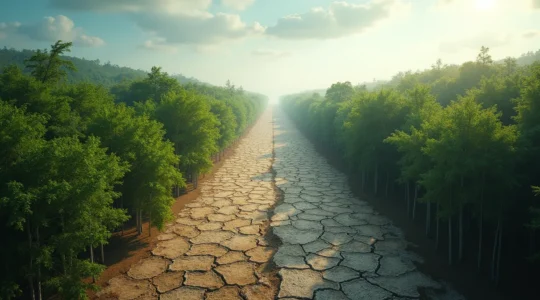
Earth Overshoot Day: Beyond the Date, It’s the Bankruptcy Notice for Your Business Model
Earth Overshoot Day signals the annual failure of our global economic system, exposing any business reliant on the “take-make-waste” model to critical resource risk. Biocapacity is not an externality but a finite asset; exceeding it creates a quantifiable “ecological debt”…
Read more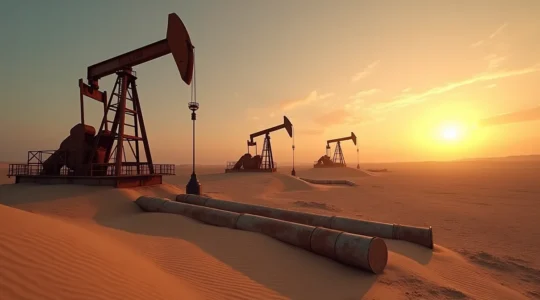
The Stranded Asset Risk: Why Fossil Fuel Investments Could Lose 40% Value by 2030?
The true stranded asset risk in fossil fuels lies not in policy alone, but in the deteriorating biophysical economics of extraction, a factor financial models often overlook. Energy Return on Investment (EROI) for key fossil fuels is in a state…
Read more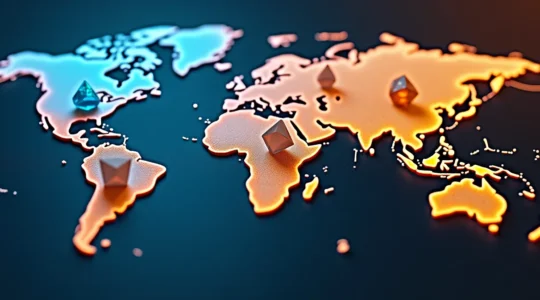
Beyond Trade Wars: Why Physical Limits on Critical Minerals Are the New Geopolitical Fault Line
The geopolitical tensions over critical minerals are often misattributed solely to trade disputes and China’s market dominance; the reality is that the supply chain is fundamentally brittle due to non-negotiable physical and environmental constraints. Hydrological limits and extreme water consumption…
Read more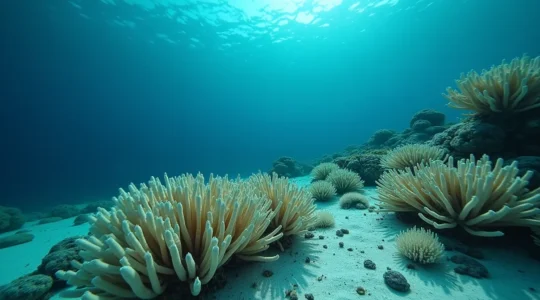
How Ocean Acidification Processes Are Dissolving the Foundation of the Marine Food Web
Ocean acidification is not merely a drop in pH; it is a critical depletion of the carbonate ions essential for marine life, imposing a direct ‘energy tax’ on calcifying organisms that threatens the viability of marine industries. Increased atmospheric CO2…
Read more
Why Protecting Mangrove Nurseries Is Critical for the Global Fishing Industry?
Protecting coastal nurseries is not an environmental expense; it is the most direct investment in the capital-producing infrastructure of the global fishing industry. Healthy mangrove and seagrass ecosystems directly determine the abundance and size of offshore commercial fish stocks. Natural…
Read more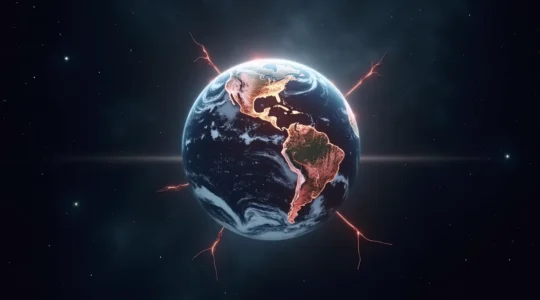
Why Crossing 6 of 9 Planetary Boundaries Threatens Global Economic Stability?
The breach of six planetary boundaries is not an environmental footnote; it is a direct and systemic threat to the global economy, driven by interconnected tipping points that create a cascade of value destruction. Ecological collapse is not a future…
Read more