
The decision to decommission or retrofit a carbon-intensive plant is no longer an environmental compliance issue; it is a core financial strategy to maximize terminal asset value.
- Retrofitting with Carbon Capture and Storage (CCS) often proves economically unviable on older assets due to significant energy penalties and high capital costs against a limited remaining lifespan.
- Decommissioning unlocks the site’s two most valuable assets: the land and the grid interconnection point, which can be repurposed for new, high-margin revenue streams like battery energy storage systems (BESS).
Recommendation: Shift analysis from minimizing decommissioning costs to maximizing asset repurposing ROI. Quantify all future liabilities, including soil contamination, and model the LCOE of replacement technologies to determine the optimal pivot point.
For industrial asset managers and utility executives, the question of what to do with an aging fleet of carbon-intensive power plants has become the defining strategic challenge of this decade. The common discourse often frames this as a binary choice between retrofitting with nascent technologies like carbon capture or succumbing to the bulldozer. This perspective is fundamentally flawed because it focuses on the machinery rather than the core asset: the strategic location with established grid access.
While public pressure and regulatory mandates push for decarbonization, the most pragmatic solutions are rarely discussed. Standard approaches often overlook the crippling energy penalties of certain retrofits or the immense, untapped financial potential of a cleared site. The real discussion should not be about preserving an old plant, but about executing a strategic pivot. The critical error is viewing these sites as liabilities to be disposed of at minimum cost, rather than as platforms for next-generation energy infrastructure.
This framework reframes the decision away from a simple retrofit-or-demolish dilemma. The true strategic approach lies in a rigorous economic analysis of asset repurposing. It involves quantifying latent liabilities, understanding the LCOE of competing technologies, and accurately timing the transition to maximize the total financial return from the asset’s end-of-life cycle. This guide will provide a decisive, economic roadmap for turning legacy infrastructure from a financial drain into a profitable cornerstone of a net-zero portfolio.
This article provides a structured economic analysis to guide your decision-making process. The following sections break down the key financial, technological, and regulatory factors to consider when evaluating the future of your legacy assets.
Summary: An Economic Framework for Carbon-Intensive Assets
- Why Is Retrofitting CCS onto Old Coal Plants Often Economically Unviable?
- How to Convert a Decommissioned Coal Plant into a Grid-Scale Battery Hub?
- Natural Gas Turbines vs Hydrogen-Ready: Which Technology Is Future-Proof?
- The Remediation Mistake That Leaves Companies Liable for Soil Contamination
- When to Decommission an Asset to Maximize Scrap Value vs Operational Revenue?
- Bridge Fuel or Dead End: Is Natural Gas Infrastructure Worth the 20-Year Investment?
- Why Does Surface Mining Destroy Local Hydrology Permanently?
- Offshore Wind Farms: Solving the Intermittency Challenge with New Turbine Tech?
Why Is Retrofitting CCS onto Old Coal Plants Often Economically Unviable?
The promise of Carbon Capture and Storage (CCS) as a lifeline for aging coal fleets often dissolves under economic scrutiny. While technologically feasible, applying CCS to plants nearing the end of their 30-40 year operational lifespan presents a cascade of financial hurdles. The primary issue is the significant “energy penalty,” where the capture process itself is highly energy-intensive. In fact, research shows CCS can consume up to 30% of a plant’s own power output, drastically reducing the saleable electricity and eroding revenue.
This efficiency loss is compounded by staggering capital expenditure. The installation requires substantial on-site space for capture equipment, complex integration with the existing steam cycle, and proximity to viable CO2 storage or transport infrastructure. For a plant with only 10-15 years of remaining life, the return on this massive investment is seldom justifiable. According to an IEA analysis, owners and investors have yet to recover more than USD 1 trillion of capital in the existing global coal fleet, making further large-scale investment in aging assets a difficult proposition. While the same analysis noted over 300 GW of the Chinese fleet could be suitable based on technical factors, the economic case remains the largest barrier.
Ultimately, the decision to retrofit hinges on a financial model that rarely closes. The combination of reduced output, high upfront costs, and a short amortization period means that retrofitting an old coal plant with CCS is often a financially inferior option compared to decommissioning and repurposing the site for a more profitable, future-proof technology. Asset managers must weigh the certainty of these costs against the speculative future value of carbon credits.
How to Convert a Decommissioned Coal Plant into a Grid-Scale Battery Hub?
Once the decision to decommission is made, the most valuable remaining asset is not the scrap metal, but the grid interconnection. Former power plant sites are uniquely suited for conversion into grid-scale Battery Energy Storage Systems (BESS) because they possess the two most critical and costly components: large tracts of land and high-voltage transmission infrastructure. This pivot transforms a retired, non-earning asset into a key player in the modern energy grid, generating revenue through grid stabilization services, energy arbitrage, and capacity markets.
This strategy allows a company to retain control of a strategic asset—the interconnection point—whose value will only increase as more intermittent renewables come online. The conversion process involves demolishing the old generation facility, remediating the soil as necessary, and installing modular battery enclosures. The Trenton Channel Energy Center in Michigan provides a compelling example, where a former coal plant is being converted into what will be the largest stand-alone energy storage site in the Great Lakes region, leveraging existing grid connections to serve the community.
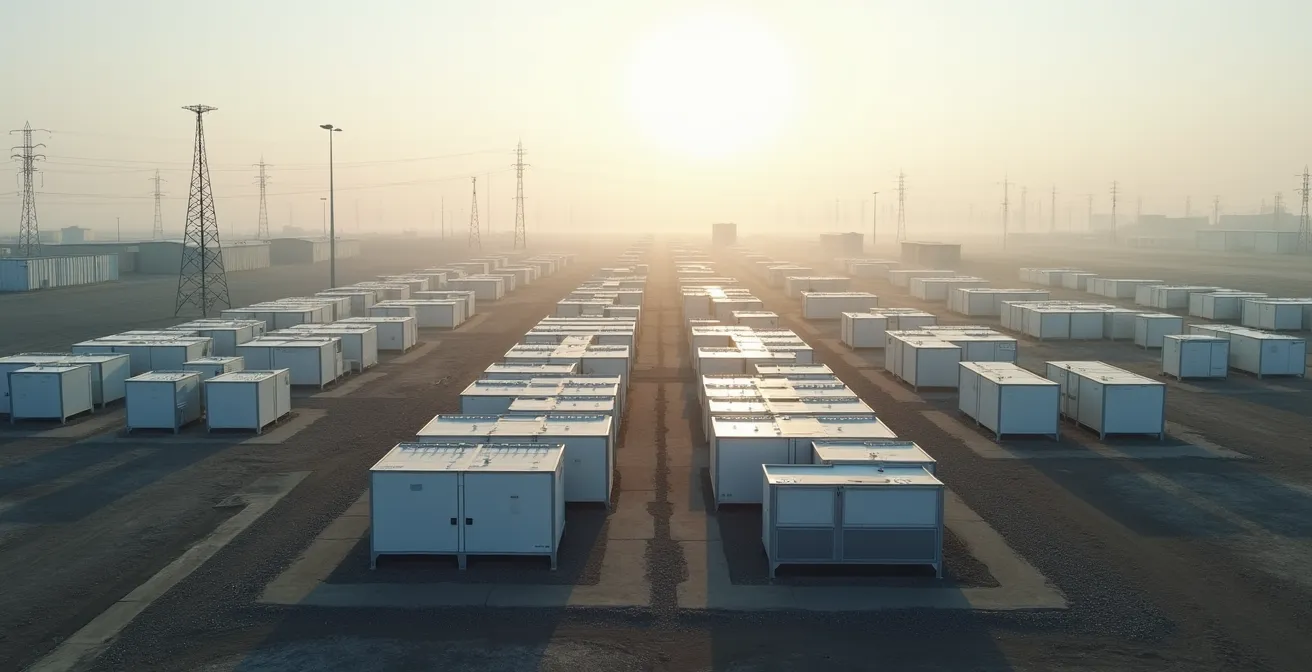
The economic and environmental narrative of such a transformation is powerful. Consider the Reid Gardner Power Station in Nevada. Once rated the nation’s dirtiest coal plant for CO2 emissions, it was fully decommissioned by 2017. Today, the site hosts the Reid Gardner Battery Energy Storage System. This project not only repurposed the land for a clean energy future but did so with remarkable efficiency, as more than 95 percent of the demolished material was recycled or reused. This demonstrates a clear path from carbon liability to clean energy asset, creating a new and sustainable revenue stream on land previously dedicated to fossil fuels.
Natural Gas Turbines vs Hydrogen-Ready: Which Technology Is Future-Proof?
When re-powering a decommissioned site, the choice of technology is a 20-to-30-year bet. The current default is often a natural gas combined-cycle turbine, prized for its reliability and relatively low upfront cost. However, with increasing pressure to decarbonize fully, investing in a gas-only asset risks creating a new stranded asset within a decade. The alternative is a “hydrogen-ready” turbine, which can run on natural gas today but is designed to co-fire with increasing blends of hydrogen, theoretically offering a path to zero-carbon operation.
The decision boils down to the Levelized Cost of Electricity (LCOE). While hydrogen-ready turbines carry a capital premium, the primary economic obstacle is the fuel itself. Currently, hydrogen power LCOE calculations indicate costs ranging from $80-150 per megawatt-hour, significantly higher than natural gas. The ETN Global Engineers Committee reinforced this in a recent report, stating:
The levelised cost of electricity (LCOE) for hydrogen gas turbines is expected to rise significantly due to high hydrogen prices, hydrogen blending in low-efficiency turbines is not economically competitive with natural gas because of additional costs, and current carbon prices are too low to justify switching from natural gas to hydrogen
– ETN Global Engineers Committee, Hydrogen Gas Turbines Report October 2024
The choice between green hydrogen (produced from renewables) and blue hydrogen (produced from gas with CCS) further complicates the financial model. This table illustrates the current economic landscape, showing blue hydrogen as the cheaper but still fossil-fuel-dependent option.
| Hydrogen Type | LCOE Range | Production Cost Target 2030 | Key Driver |
|---|---|---|---|
| Green Hydrogen | $100-120/MWh | $1.5-3.0/kg | Renewable electricity costs |
| Blue Hydrogen | $70-90/MWh | N/A | Natural gas prices + CCS costs |
For an asset manager, the pragmatic choice today may still be natural gas, but with a clear-eyed understanding of the stranded asset risk. A hydrogen-ready turbine is a hedge against future carbon pricing or regulation, but one that relies on a hydrogen fuel market that is not yet economically viable at scale.
The Remediation Mistake That Leaves Companies Liable for Soil Contamination
The most significant and often underestimated financial risk in decommissioning a power plant is not the demolition itself, but the long-tail liability from soil and groundwater contamination. A common mistake is to follow standard remediation protocols that only address regulated contaminants of the past, ignoring a new generation of “forever chemicals” like PFAS (per- and polyfluoroalkyl substances). These substances, used in various industrial applications on-site, are now facing intense regulatory scrutiny. The EPA’s coal ash initiative, for instance, will focus on approximately 300 facilities nationwide with 775 coal ash units, signaling a new era of enforcement.
The critical error is assuming that a completed remediation today closes the book on liability. As new substances are designated as hazardous, regulators can force sites to be “reopened” for further, often more expensive, cleanup. This “reopener liability” can derail the economics of a redevelopment project years after the initial work was signed off. As legal experts from Buchanan Ingersoll & Rooney PC note:
Considering the ubiquity of PFAS in many different types of products and industrial usages, the designation of certain PFAS as hazardous substances raises the possibility of reopening existing consent decrees in order to address PFAS contamination
– Buchanan Ingersoll & Rooney PC, The 2024 EPA PFAS Regulations Analysis
Failing to proactively test for and document unregulated contaminants like PFAS is a strategic blunder. It not only exposes the company to future financial and legal jeopardy but also complicates the sale or redevelopment of the property. A prospective buyer or partner will demand comprehensive environmental due diligence, and the discovery of unaddressed contamination can crater the asset’s value. Proactive and thorough environmental assessment is not a cost center; it is an essential investment to de-risk the asset and preserve its future value.
Action Plan: Critical Steps to Avoid PFAS Liability in Coal Plant Decommissioning
- Test for PFAS and other unregulated contaminants beyond standard protocols to establish a comprehensive environmental baseline.
- Document all contamination findings comprehensively before any remediation work begins to define the scope of the problem.
- Evaluate liability transfer options through specialized environmental insurance products designed to cover future reopener risks.
- Consider RCRA Subtitle C hazardous waste landfills for disposal of any waste found to have high PFAS concentrations.
- Conduct specific soil and groundwater assessments tailored to the intended future use of the site (e.g., commercial, industrial).
- Plan for potential reopener liability under new hazardous substance designations by setting aside financial reserves or securing insurance.
When to Decommission an Asset to Maximize Scrap Value vs Operational Revenue?
The decision of *when* to decommission a plant is a delicate financial balancing act. For an asset manager, the goal is to pinpoint the exact moment when the net present value of future operational revenue is overtaken by the combined value of decommissioning now: the scrap value, the reduction of ongoing operational/environmental risk, and the opportunity cost of not repurposing the site. Running a plant an extra year for marginal profit can be a strategic error if it means missing a peak in scrap metal prices or a lucrative window to develop a BESS project.
The calculation involves several key inputs. First is the cost of decommissioning itself, which can be substantial. For example, a World Bank Group report estimates that the average decommissioning costs for US coal plants are $117,000/MW. This cost must be weighed against the potential revenue from selling scrap metals like steel and copper, whose prices are volatile. Simultaneously, the model must account for the declining profitability of the plant as maintenance costs rise and its efficiency wanes.
However, the most crucial variable is the opportunity cost of delay. This is where the concept of “Asset Repurposing ROI” becomes paramount. An IEEFA case study on repurposing coal plants in India provides a powerful illustration. The analysis found that while direct decommissioning costs were approximately US$58 million, the direct benefits from repurposing the site for solar and battery storage were up to US$122.8 million. When including indirect social benefits, the total value from repurposing soared to nearly US$591 million. Even without social benefits, the net gains from repurposing covered a significant portion—up to 16.4% of the capital expenditure for a new solar and battery project. This proves that delaying decommissioning to chase diminishing operational profits can mean forfeiting a much larger, more certain return from immediate repurposing.
Bridge Fuel or Dead End: Is Natural Gas Infrastructure Worth the 20-Year Investment?
Natural gas has long been positioned as the logical “bridge fuel” to transition away from coal while renewables scale up. With predictions from IHS Markit that at least 30 GW of coal plants will come offline each year through 2030, the market for replacement power is enormous. For asset managers, building new natural gas infrastructure seems like a safe, reliable bet. However, this 20-year investment is fraught with accelerating risk of becoming a stranded asset well before its planned retirement.
The primary threat comes from the rapidly falling costs of renewable energy paired with battery storage. While natural gas power is subject to the volatility of fuel prices, the LCOE of solar, wind, and storage continues its steep downward trajectory. Recent analysis from Lazard shows that the economics of new-build solar and wind are already competitive with, or even cheaper than, the marginal cost of operating existing fossil fuel plants in many regions. Investing billions in a new gas pipeline or power plant today means betting against this technological and economic trend for the next two decades.
This risk is amplified by shifting regulatory landscapes and increasing public and investor pressure for a full transition to net-zero, not a halfway measure. A gas plant built in 2025 may face stringent carbon taxes or emissions limits by 2035 that were not factored into the original financial model. The “bridge” may turn out to be much shorter than anticipated, leaving owners with a multi-billion dollar asset that is either unprofitable to run or requires another costly retrofit. The prudent strategy may instead be to leapfrog the bridge entirely and invest directly in technologies like BESS or renewables that are aligned with the long-term energy future.
Why Does Surface Mining Destroy Local Hydrology Permanently?
For a power plant, the security and cost of its fuel supply are paramount. For coal-fired plants, this chain of risk extends upstream to the mines, where surface mining activities inflict lasting and often irreversible damage on local hydrology. This is not merely an environmental concern; it is a direct operational and financial risk. Surface mining, particularly mountaintop removal, fundamentally alters the landscape by removing forests, topsoil, and underlying rock. This process destroys the natural watershed’s ability to absorb, filter, and slowly release water.
The consequences are twofold. First, it leads to increased flood risk and water contamination. Rainfall, instead of being absorbed, runs off the exposed rock, carrying sediments and toxic mining byproducts like selenium and arsenic into streams and rivers. This can drastically increase the water treatment costs for the power plant itself if it draws water from these affected sources. The plant effectively pays to clean up the pollution created by its own fuel supplier. Second, the destruction of the watershed and its underlying aquifers reduces the landscape’s capacity to store water, making the region more vulnerable to drought. For a power plant that relies on a consistent water supply for cooling, this creates a significant long-term operational vulnerability.
Quantifying this hydrological risk is a critical part of fuel supply contract negotiation. Asset managers must assess the upstream mining practices of their suppliers and price in the potential for increased water treatment costs, operational disruptions from drought, and even long-term liability from aquifer contamination. The permanent damage to local hydrology caused by surface mining is a hidden cost embedded in every ton of coal, and it represents a tangible threat to the plant’s long-term profitability and operational stability.
Key Takeaways
- The decision to retrofit or demolish is a financial one, centered on maximizing the terminal value of the land and grid connection.
- Latent environmental liabilities, like PFAS contamination, represent a significant and often un-costed financial risk that can derail redevelopment.
- Asset Repurposing ROI, particularly for Battery Energy Storage Systems (BESS), frequently offers a superior return compared to extending the life of an aging, inefficient plant.
Offshore Wind Farms: Solving the Intermittency Challenge with New Turbine Tech?
As the energy system pivots away from centralized, carbon-intensive plants, a key challenge is maintaining grid stability with intermittent sources like wind and solar. Historically, the inertia provided by the large, spinning turbines of fossil fuel plants has been crucial for stabilizing grid frequency and voltage. The transition to inverter-based resources like wind has raised concerns about grid fragility. However, new advancements in wind turbine control systems are turning this challenge into a solution.
Emerging “grid-forming” inverter technology allows wind turbines to do more than just generate power; they can actively provide the same grid stabilization services as conventional generators. This technology enables the turbine’s inverter to mimic the behavior of a synchronous generator, creating its own voltage and frequency reference to help stabilize the grid, a capability essential for a grid with a high penetration of renewables. The WindVSG project, a collaboration between GE and NREL, has been a pioneer in this area. Vahan Gevorgian, NREL’s Chief Engineer, confirmed their success, stating, “We have shown that a common variety of wind turbine can serve the same underlying voltage and frequency stability services that are often provided by fossil fuel power plants.”

This capability has already been demonstrated in the field. The GE-NREL team successfully deployed and validated grid-forming controls for a 2.5-MW type-3 wind turbine drivetrain, proving that wind farms can be active participants in ensuring grid reliability, not just passive energy producers. For asset managers, this is a game-changer. It means that new investments in offshore wind are not just replacing megawatts of power, but also the critical ancillary services that were once the exclusive domain of fossil fuel plants. This dual revenue potential—from selling both energy and grid services—fundamentally strengthens the business case for accelerating the transition to renewable generation.
Now that the economic framework, risks, and opportunities are clear, the next step is to apply this strategic lens to your specific asset portfolio. Begin by quantifying the repurposing ROI of your oldest or least efficient plants to identify the prime candidates for transition. A proactive, data-driven approach to decommissioning is the most effective way to maximize value in a net-zero world.