
The perceived efficiency of large-scale monoculture masks a profound systemic fragility, concentrating biological and financial risk to an unsustainable degree.
- Monoculture systems create a uniform landscape where disease can spread without resistance, leading to catastrophic yield loss.
- Diversified agroecological models consistently demonstrate greater total output (Land Equivalent Ratio > 1.2) and significantly higher revenue stability, especially during adverse conditions like drought.
Recommendation: Investors and policymakers must re-evaluate agricultural assets not by short-term yield per hectare, but by long-term resilience and total system output to mitigate cascading supply chain failures.
The vast, uniform fields of industrial monoculture farming project an image of unparalleled efficiency and control. To an investor or policymaker, this landscape represents a streamlined, scalable model for food production, optimized for mechanical harvesting and simplified management. This approach has undeniably fueled a global food system capable of feeding billions. However, this hyper-specialization comes at a hidden, yet severe, cost. The very uniformity that promises efficiency also creates the perfect conditions for catastrophic failure.
The primary critique of monoculture often centers on its lack of genetic diversity, a valid but incomplete picture. When an entire region is planted with a single genetic variant of a crop, it becomes a ticking clock. A pathogen that evolves to overcome that plant’s specific defenses finds an unrestricted buffet, capable of wiping out an entire harvest in a single season. This is not a hypothetical scenario; it is a recurring pattern in agricultural history. The underlying issue, however, extends far beyond simple biology. It is a fundamental flaw in risk management.
This analysis will reframe the discussion away from a purely ecological critique and toward a language of systemic risk and portfolio management. We will argue that relying on monoculture is akin to investing 100% of a portfolio in a single, volatile stock. The real vulnerability lies not just in the field, but in the concentrated failure points it creates across biological, market, and insurance systems. Diversification, therefore, is not merely an environmental ideal; it is a non-negotiable strategy for ensuring long-term food security and, crucially, financial profitability.
This article will deconstruct the systemic fragility of monoculture by examining its impact on soil health, resource efficiency, and long-term output. We will then explore the quantifiable risks it poses to revenue and global trade, and contrast this with the proven resilience and superior financial performance of diversified agroecological models, particularly in the face of climate volatility.
Summary: Deconstructing the Systemic Risk of Monoculture
- Why Does Continuous Corn Planting Deplete Soil Nitrogen in 3 Years?
- How to Introduce Strip Cropping into a Monoculture System Without Losing Efficiency?
- Yield per Hectare vs Total System Output: Which Is Higher in the Long Run?
- The Insurance Risk of Relying on a Single Crop Variety for 100% of Revenue
- How to Reduce Pesticide Resistance in Monocultures Through Rotation?
- Why Do Hedgerows Reduce the Need for Insecticides by 40%?
- The Global Trade Risk When Multiple Breadbaskets Fail in the Same Year
- Agroecology vs Conventional Farming: Which Model Yields Better Profits in Drought Years?
Why Does Continuous Corn Planting Deplete Soil Nitrogen in 3 Years?
The foundation of any resilient agricultural system is its soil. Monocultures, particularly of heavy-feeding crops like corn, systematically dismantle this foundation. Continuous corn planting acts as a constant, targeted drain on a specific set of soil nutrients, with nitrogen being the most critical. Unlike a diverse ecosystem where different plants have varied nutrient requirements and some even replenish nitrogen (like legumes), a corn monoculture only withdraws. This relentless demand quickly outpaces the soil’s natural ability to regenerate and retain essential elements.
This isn’t a slow, generational decline; it is a rapid degradation of the asset base. In fact, research from the Arkansas River Valley demonstrates that just two to three years of continuous corn production, even with standard nitrogen fertilization, can lead to a significant reduction in residual soil nitrate-nitrogen (NO3-N). This means that year after year, farmers must apply progressively more synthetic fertilizer simply to maintain the previous year’s yield, a classic case of diminishing returns. This creates a chemical dependency that masks the underlying degradation of the soil’s inherent fertility.
From a risk perspective, this creates two major liabilities. First, it increases operational costs and exposure to volatile fertilizer markets. Second, and more critically, it weakens the plants themselves. Nitrogen-deficient soil produces less vigorous crops that are inherently more susceptible to pests and diseases, creating a self-perpetuating cycle of intervention with pesticides and fungicides. The system becomes brittle, propped up by costly external inputs rather than sustained by its own health. This initial degradation is the first and most fundamental step toward systemic fragility.
How to Introduce Strip Cropping into a Monoculture System Without Losing Efficiency?
The primary objection to moving away from monoculture is often a perceived loss of efficiency. The argument is that the specialized machinery and streamlined processes designed for single-crop fields would be rendered obsolete. However, this view fundamentally misunderstands the nature of productivity. The introduction of practices like strip cropping—planting different crops in alternating narrow bands—does not decrease efficiency; it redefines it by boosting total system output and creating internal synergies.
The key metric for understanding this is the Land Equivalent Ratio (LER). An LER of 1.0 means that the intercropped system produces the same yield as a monoculture on the same amount of land. Any value above 1.0 indicates a yield advantage. Consistently, research from Netherlands organic farming systems shows LER values in strip cropping systems ranging from 1.31 to 1.45. This means the diversified system is 31% to 45% more productive than its monoculture counterpart. It achieves this by creating beneficial “edge effects,” where different crops support each other by, for example, providing shade, blocking wind, or hosting pollinators.
This is not a niche finding. As a major research synthesis highlights, the efficiency gains are substantial and well-documented. According to a recent meta-analysis in Frontiers in Plant Science:
intercropping crops can achieve an average LER of 1.23, indicating that monoculture requires an additional 23% of farmland to obtain the same yield as intercropping.
– Research synthesis, Frontiers in Plant Science
For an investor, this data is critical. It shows that diversification is not about sacrificing output for ecological benefits; it is about achieving superior output through a more intelligent system design. The transition requires a shift in management and potentially some machinery adjustments, but the underlying principle is one of enhanced, not diminished, productivity.
Action Plan: Phasing in Strip Cropping
- System Assessment: Inventory current machinery, field layouts, and primary crop. Identify compatible secondary crops (e.g., legumes with grains) that have different growth cycles or nutrient needs.
- Pilot Program Design: Dedicate a 5-10% portion of the land to a pilot strip cropping project. Determine strip width based on existing equipment (e.g., width of planter or harvester).
- Data Collection Protocol: Establish clear metrics for the pilot. Track input costs (seed, fertilizer), labor hours, and yield for each crop separately. Calculate the LER at harvest.
- Economic Analysis: Compare the total gross margin from the pilot strip cropping plot against an equivalent area of monoculture. Factor in any reduced fertilizer or pesticide costs.
- Scalability Plan: Based on positive LER and economic results, develop a 3-5 year phased plan to convert a larger percentage of acreage, prioritizing fields with the poorest soil health first.
Yield per Hectare vs Total System Output: Which Is Higher in the Long Run?
The obsession with “yield per hectare” of a single commodity is a dangerously narrow metric that has driven agricultural investment for decades. It measures the output of one product in isolation, ignoring the broader health, resilience, and total productivity of the land. A more accurate and insightful metric for long-term viability is Total System Output, which accounts for the combined yield of all components in a diversified system. When this metric is applied, polyculture systems consistently outperform monocultures.
This is not just theoretical. Experiments systematically show that well-designed multi-crop systems are more productive overall. The Land Equivalent Ratio (LER) again provides the hard data, showing that you would need more land under monoculture to produce the same amount of food and fiber as a polyculture system. For instance, experimental evidence demonstrates that multi-crop systems with as many as seven different species can maintain LER values significantly above 1.0, proving a definitive yield advantage over time. These systems create a virtuous cycle where resource use (sunlight, water, nutrients) is optimized across different plant heights and root depths.
The visual difference between these two approaches is stark. A monoculture is a single, uniform layer, whereas a polyculture is a multi-layered, interactive ecosystem.
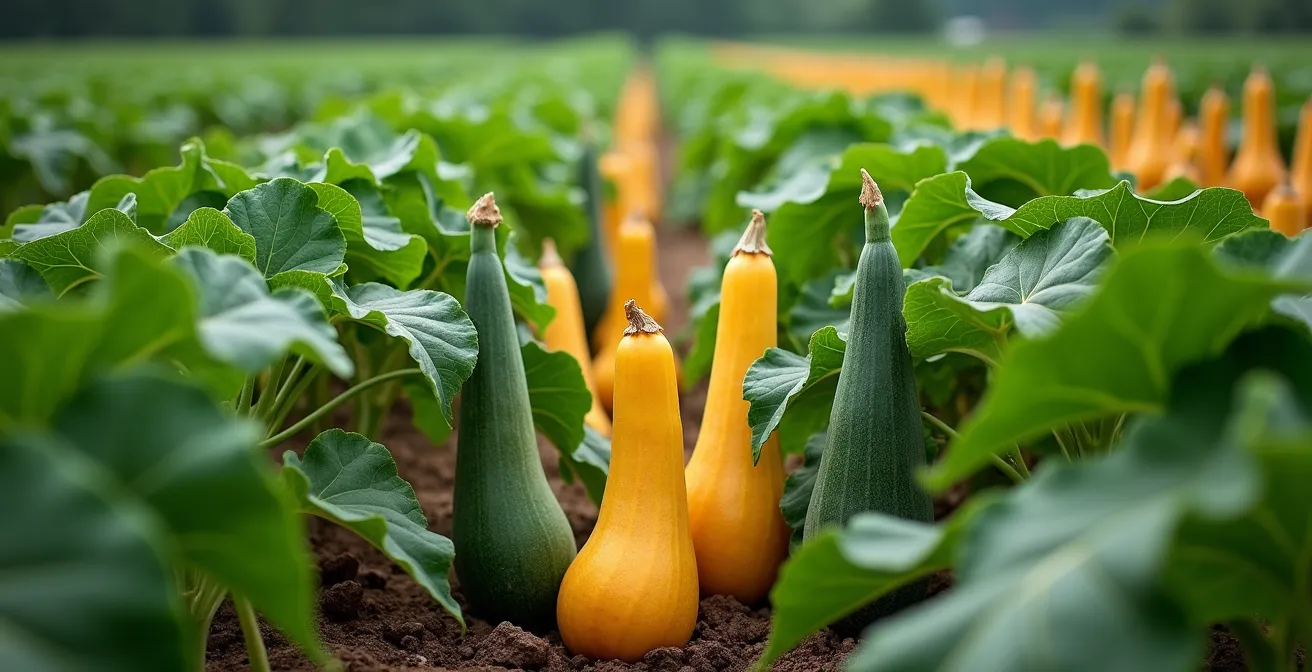
As this image of a polyculture field illustrates, different species occupy different ecological niches simultaneously. Tall corn provides a structure for beans to climb, while low-growing squash shades the ground, conserving moisture and suppressing weeds. This isn’t just a picturesque landscape; it is a highly efficient, self-regulating production system. For a policymaker concerned with food security or an investor focused on long-term asset value, focusing on Total System Output reveals that diversified farming is the more productive and resilient path forward.
The Insurance Risk of Relying on a Single Crop Variety for 100% of Revenue
Framing monoculture in investment terms reveals its most glaring weakness: extreme risk concentration. Relying on a single crop variety for 100% of an operation’s revenue is a portfolio management strategy that would be considered reckless in any other industry. This approach consolidates all risk into one biological asset with a single point of failure. When that point fails—due to a novel pathogen, a resistant pest, or an extreme weather event tailored to that crop’s vulnerability—the financial consequences are total. This is not a manageable risk; it is a systemic fragility waiting for a trigger.
The biological mechanism is brutally simple. A genetically uniform field is a clear path for any pathogen that can exploit that specific genetic code. There are no natural barriers, no resistant individuals to slow the spread. As molecular biologist Li-Jun Ma explains, the system is designed for rapid transmission:
The lack of diversity in monocropping means that if a disease evolves to infect one plant, it can quickly spread through entire fields with no natural barriers to stop it.
– Li-Jun Ma, Molecular Biologist, Earth Day Organization
This creates an unsustainable dependency on crop insurance and government bailouts. These financial instruments become a subsidy for a high-risk farming model, socializing the costs of failure while privatizing the profits in good years. For an insurance underwriter, a landscape dominated by a single crop variety represents a correlated risk of immense scale. A single weather event or disease outbreak could trigger billions in claims across an entire region, threatening the solvency of insurers. The premium costs for such concentrated risk should, logically, be astronomical. For investors, this means that the profitability of monoculture operations is often artificially inflated, failing to price in the true cost of their inherent instability.
How to Reduce Pesticide Resistance in Monocultures Through Rotation?
Beyond disease outbreaks, monocultures accelerate another critical threat: the development of pesticide resistance. By repeatedly exposing a pest population to the same chemical control or the same plant-based resistance trait (in a genetically modified cultivar), the system applies immense selective pressure. It effectively runs a large-scale experiment to find the few individuals who can survive, allowing them to reproduce and create a new, resistant population. As agricultural research indicates that pests can adapt to resistant cultivars over time, this renders our most advanced crop protection tools ineffective in a matter of years.
This forces a costly arms race, requiring the development and application of new, often more potent, pesticides. However, a far more elegant and sustainable solution lies in breaking the cycle through diversification. This can be done through crop rotation over time, or even through variety mixing within the same season. Introducing different genetic traits into the field disrupts the selective pressure and slows the evolution of resistance.
Case Study: Suppressing Disease and Resistance with Variety Mixing
Research on controlling diseases like powdery mildew demonstrates the power of simple diversity. Mixing different plant varieties, some susceptible and some resistant, within the same field effectively suppresses disease spread through two key mechanisms. First, the distance between susceptible plants is increased (a “thinning effect”), making it harder for spores to travel from one vulnerable host to the next. Second, the resistant plants act as physical “barriers,” intercepting spores and preventing them from reaching other susceptible plants. This simple structural change breaks the chain of infection and significantly reduces the need for fungicide applications, thereby lowering the selective pressure that drives resistance.
This strategy of mixing varieties or rotating crops is a form of proactive resistance management. Instead of reacting to a resistant pest with a new chemical, it uses ecological principles to prevent or delay the problem from emerging in the first place. For a farm enterprise, this translates to lower input costs, extended efficacy of existing crop protection tools, and a more stable, predictable production environment. It shifts the management approach from a reactive, high-cost battle to a proactive, low-cost strategy of prevention.
Why Do Hedgerows Reduce the Need for Insecticides by 40%?
One of the most effective forms of “biological insurance” against the risks of monoculture is the integration of non-crop habitats, such as hedgerows. These strips of native trees, shrubs, and wildflowers are often seen as unproductive land, but from a systemic risk perspective, they are a critical asset. Hedgerows function as on-site reservoirs of biodiversity, providing habitat for the natural enemies of crop pests, such as predatory insects (e.g., ladybugs, lacewings) and parasitic wasps. These beneficial species spill out into the adjacent fields, providing a continuous, free pest control service.
The economic impact of this ecological service is not trivial; it is substantial and quantifiable. The title’s suggestion of a 40% reduction is actually conservative. A large-scale French study across hundreds of farms provided even more dramatic results: a large-scale French study across 557 farms found that simply increasing the landscape-scale hedgerow cover from 1% to 3% was associated with a 50% reduction in insecticide use. This is a direct conversion of an ecological asset into a financial saving, reducing input costs while simultaneously lowering the environmental impact and risk of pesticide resistance.
This habitat for beneficial insects is the core mechanism behind the reduction in pesticide dependency.

By fostering a population of natural predators, hedgerows create a resilient system that can better withstand pest outbreaks. Instead of a sterile environment where any pest arrival necessitates a chemical response, it creates a dynamic ecosystem with its own checks and balances. For a policymaker, incentivizing hedgerow planting is a highly effective tool for reducing the national pesticide load. For an investor, a farm with well-managed hedgerows is a less risky, more self-sufficient asset with lower and more predictable operating costs.
The Global Trade Risk When Multiple Breadbaskets Fail in the Same Year
The systemic fragility of monoculture extends far beyond the farm gate. Our global food system is built on the output of a few key “breadbasket” regions, each specializing in a narrow range of commodity crops. When these geographically distinct regions all rely on the same high-risk monoculture model, they become vulnerable to correlated failures. A single, highly virulent pathogen or a widespread drought pattern driven by climate change could trigger simultaneous harvest failures in multiple breadbaskets, leading to a cascading failure across the global supply chain.
This is the ultimate macro-risk of monoculture. The very practices that drive it—such as large-scale land clearing—are also implicated in altering global climate and disease patterns. As one environmental report notes, the interconnectedness of these issues creates compounding risks. Citing university research, it states:
Deforestation, climate change and monoculture farming affect the biodiversity of bird species, which impacts disease spread patterns like West Nile virus.
– University research findings, Truthout Environmental Report
A scenario where key breadbaskets in North America, South America, and Eastern Europe all experience a 20-30% yield reduction in the same year due to a shared vulnerability is no longer a remote possibility. The consequences would be immediate and severe: dramatic price spikes, export bans as nations hoard supplies, civil unrest in import-dependent countries, and immense pressure on global financial and insurance markets. The reliance on a globalized system of localized specialists creates a network that is efficient in stable times but dangerously brittle under stress. Policymakers must recognize that promoting agricultural diversity within their own borders is a matter of national security, acting as a buffer against the volatility of global trade.
Key takeaways
- Monoculture creates a concentrated financial risk by betting 100% of revenue on a single biological asset with a known vulnerability to rapid failure.
- The core weakness begins with rapid soil nutrient depletion, creating a costly dependency on chemical inputs and producing weaker, more susceptible plants.
- Diversified systems are not less efficient; they consistently demonstrate higher total system output (LER > 1.2), meaning they produce more food on less land than monocultures.
- Agroecological features like hedgerows are not cosmetic; they are productive assets that provide quantifiable services, such as reducing insecticide needs by up to 50%.
Agroecology vs Conventional Farming: Which Model Yields Better Profits in Drought Years?
The ultimate test of any agricultural model is its performance under stress. In an era of increasing climate volatility, the frequency and intensity of droughts represent a primary challenge to food security and farm profitability. It is in these adverse conditions that the superior resilience—and profitability—of agroecological systems becomes most apparent. While conventional monocultures may produce high yields in perfect years with ample water, they are extremely vulnerable when conditions are not ideal. Agroecological farms, by contrast, are designed for resilience.
A key reason for this is superior soil health. Agroecological practices like cover cropping, composting, and reduced tillage build up soil organic matter. This is not just an ecological benefit; it’s a direct economic advantage in water-scarce environments. As soil science research confirms that for every 1% increase in soil organic matter, an acre of soil can hold approximately 20,000 additional gallons of water. This water-holding capacity acts as a crucial buffer during dry spells, sustaining crops when rainfall is scarce. Monoculture soils, typically low in organic matter, lack this buffer and require far more irrigation, a significant cost and a point of failure in a drought.
This resilience translates directly to the bottom line, providing not just higher profits but, more importantly, greater revenue stability. An analysis of strip cropping in organic vegetable systems provides compelling financial evidence.
Case Study: Revenue Stability in Diversified Organic Systems
A study comparing strip-cropped organic vegetables to their monoculture counterparts found that the diversified systems produced a significantly higher mean annual gross margin—21% higher for a faba bean-tomato system and an astonishing 319% higher for a wheat-zucchini system. Critically, the revenue from the strip-cropped systems had a much lower coefficient of variation, which, according to the analysis in Renewable Agriculture and Food Systems, indicates greater revenue stability from year to year. This stability is the hallmark of a de-risked, resilient investment.
For investors and policymakers, the conclusion is clear. The continued reliance on monoculture is a high-risk strategy based on outdated metrics of efficiency. A transition toward diversified, agroecological models is not a concession to environmentalism; it is a strategic imperative for building a resilient, secure, and ultimately more profitable food system. The first step is to re-evaluate all agricultural investments through the lens of systemic risk and long-term resilience.